The Savile Row Method
What Savile Row training really involves, how it differs from made-to-measure, and why it changes how a bespoke suit is drafted in Victoria BC.
We often hear from homeowners and business owners that finding true, lasting quality is an ongoing challenge.
Marketing copy easily stretches a brief weekend workshop into a decade of supposed craft. The phrase “Savile Row trained” appears everywhere in the custom clothing market, but finding a genuine Savile Row tailor Canada residents trust is challenging.
Our team approaches this topic by looking past the advertising to see the actual hands-on work. Our companion guide on what a bespoke suit actually is spells out the non-negotiable construction markers that separate the real craft from marketing; this piece looks at the apprenticeship tradition behind those markers.
You will quickly see why it fundamentally changes how a garment fits.
What Savile Row apprenticeship is
Our experience shows that a full Savile Row apprenticeship is a strict, hands-on workshop program running for three to six years under a single master. This rigorous timeline is the only way a true bespoke tailor Canada offers can achieve such high standards. The Savile Row Bespoke Association (SRBA) currently mandates exactly 4 to 6 years for cutting specialists and 3 to 5 years for coat-makers.
We observe that the craft generally splits into two distinct disciplines:
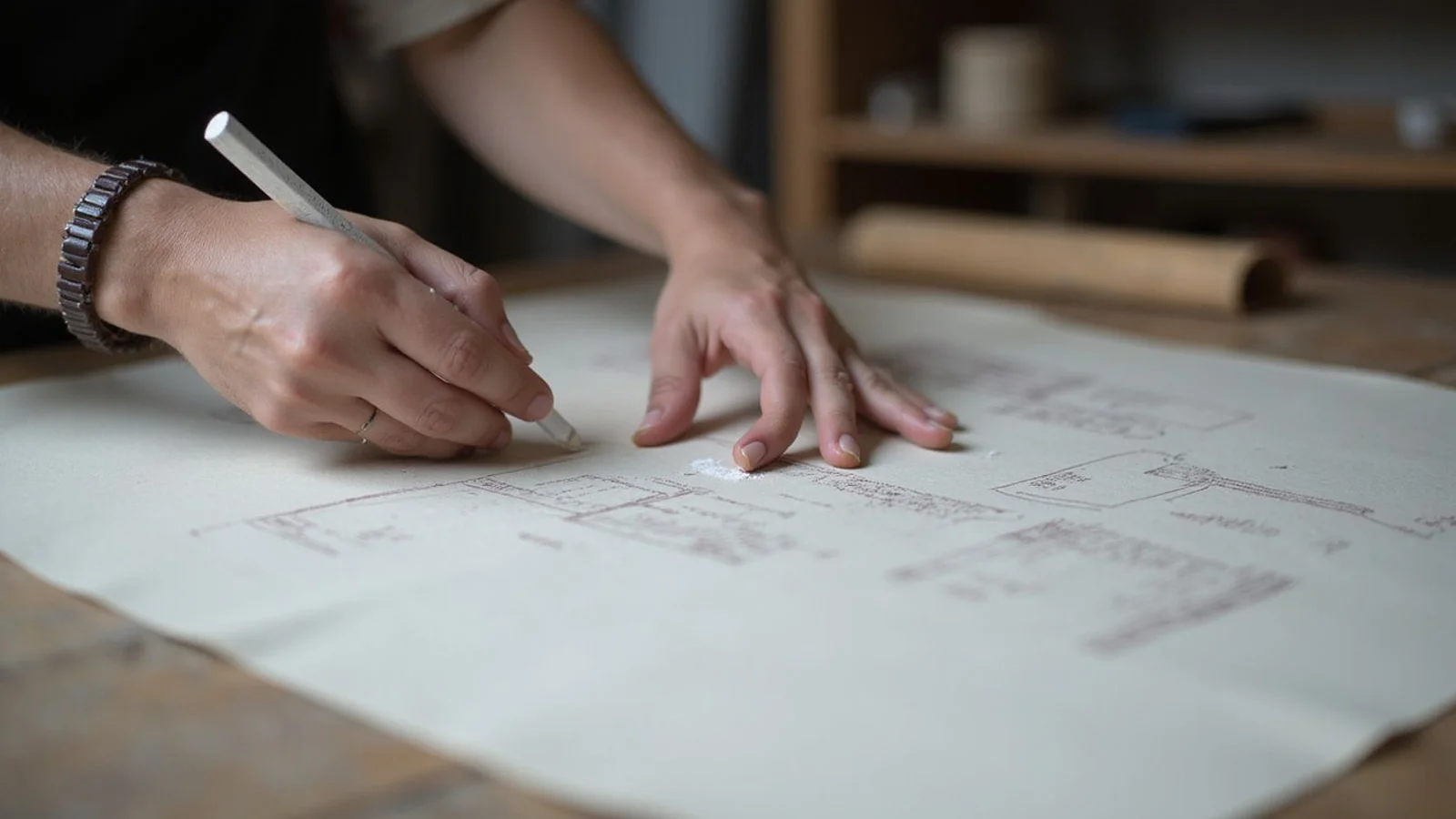
- The cutter drafts the paper pattern directly from the client’s measurements, cuts the cloth, runs the fittings, and chalks every adjustment. This professional acts as the primary client-facing craftsman.
- Our industry calls the coat-maker the tailor proper. They canvas the chest, pad-stitch the lapel, and set the sleeves using traditional methods. A practitioner who has trained through both sides understands exactly why a pattern behaves a certain way on the body.
Our Bespoke tradition keeps this entire workflow in one pair of hands. Most modern operations break the craft apart so a salesperson measures, an algorithm scales a pre-existing block, and a factory stitches. Real craftsmanship rejects this disjointed factory model entirely.
The tools of the trade
We know that a traditional workshop often looks surprisingly simple compared to a modern factory. The tools of the trade are basic instruments like shears, chalk, and natural horsehair canvas rather than heavy machinery. The magic lives in the savile row method itself instead of automated presses.
Our shop relies on a few fundamental items to construct a proper garment:
- Paper pattern. A template is drafted freehand directly from the client’s measurements. Each pattern is completely unique and is retained for life, meaning second commissions skip this initial stage.
- Basted fitting. We consider the basted fitting to be the most crucial step in the process. This half-finished jacket has the canvas and sleeves temporarily tacked into place, representing the single point where it can be significantly reshaped.
- Full canvas construction. An interior layer of 100% natural horsehair canvas floats between the cloth and the lining. We use this hidden layer to give the chest its shape and allow it to drape naturally over time.
- Hand-work. You will find pad-stitching on the lapel, pick-stitching along the edges, and sleeves set entirely by hand. These manual techniques ensure the fabric maintains its elasticity and moves comfortably with you.
We often compare full canvas construction against the standard fused jackets you find in stores. Fused jackets use a synthetic glue to bond the inner lining, which creates a stiff appearance. A quick comparison highlights why the traditional method is a better investment for your wardrobe.
| Feature | Full Canvas (Traditional) | Fused (Factory) |
|---|---|---|
| Internal Structure | 100% natural horsehair and wool | Synthetic glued interlining |
| Starting Cost (CAD) | $1,300 to $3,000+ | $500 to $950 |
| Lifespan | 10 to 20 years | Bubbles after 2-3 cleanings |
Three generations of Finch
We are pleased to share that David Finch represents the third generation in his family to work this specific craft. His grandfather opened a small shop in the north of England in the 1950s. His father later moved south and completed a full apprenticeship in London.
Our Victoria location opened in 2015 when David finished his London training and established his practice. Operating out of 1024 Fort Street in Victoria, BC, David and his wife Maria manage every step of the process on-site. They guarantee that every cut and stitch happens locally rather than being outsourced to a factory.
We view the apprenticeship itself as the only true credential in this industry. You verify a maker’s skill by asking which specific house they trained at. The resulting jacket proves the lineage because the shoulder sits clean, the chest has life, and the collar rolls without needing an iron press.
What the Victoria client gets
Our clients immediately notice three practical differences when they put on a properly constructed garment. The final product fits flawlessly, breathes naturally, and outlasts standard retail clothing by decades. These benefits directly impact your comfort during long days at the office or formal events.
- Shoulder accuracy. We focus heavily on shoulder accuracy to accommodate natural body variations. Hand-drafted shoulder-slope means each side is drafted separately to account for any asymmetry. No standard factory block can replicate this level of exact alignment.
- Drape. Our full canvas interiors allow the chest to follow your body rather than sitting flat and rigid. The cloth actually moves with you when you walk or reach for an item. This natural drape improves over time as the horsehair canvas molds to your specific shape.
- Longevity. We construct these garments with an eye on true longevity. A hand-made, fully canvassed jacket rotated properly easily lasts ten to twenty years. Fused factory jackets begin to bubble and separate after just two or three trips to the dry cleaner.
We suggest reviewing our detailed guide for a broader three-way comparison on these options. Please see bespoke vs made-to-measure vs off-the-rack to understand the exact differences in construction.
”Savile Row-trained” is a verified apprenticeship lineage, not just a catchy marketing phrase.
We advise you to always ask which house a maker trained at and how many years they spent at the bench. Look closely at the actual work before making an investment.
Contact our Fort Street shop today to experience a fitting and discover how properly constructed clothing can improve your daily routine.

Common questions
What is the difference between a cutter and a coat-maker on Savile Row?
+
The cutter drafts the pattern, takes measurements, and runs the fittings. The coat-maker constructs the jacket by hand, canvassing the chest and setting the sleeves. A fully trained Savile Row tailor has apprenticed through both sides of the craft.
Does Savile Row training require certification?
+
It is an apprenticeship tradition, not a licensed credential. Verification comes from the house the tailor trained under, not a certificate on the wall — ask which house and how many years.
Why does a basted fitting matter?
+
It is the only fitting where the jacket can still be significantly reshaped — the canvas and sleeves are loosely tacked rather than sewn through. Once the jacket is finished, the drape is locked.
More from this cluster
Caring for Your Custom-Tailored Garments
How to press, brush, rotate, and store a bespoke suit so it lasts ten years. Dry cleaning frequency, hanger choice, and stain handling.
InformationalHow a Suit Should Actually Fit: The 6 Points That Matter
The 6 fit points that determine whether a suit works: shoulder point, sleeve length, jacket length, trouser break, collar gap, waist suppression.
Decision stageHow to Find a Trustworthy Tailor in Victoria, BC
Questions to ask, red flags to watch for, and how to tell a real tailor from a retail alteration counter in Victoria BC.
Questions beyond what's here?
Free thirty-minute consultations on Fort Street. We'll answer your specific questions and give you a realistic quote.