Caring for Your Custom-Tailored Garments
How to press, brush, rotate, and store a bespoke suit so it lasts ten years. Dry cleaning frequency, hanger choice, and stain handling.
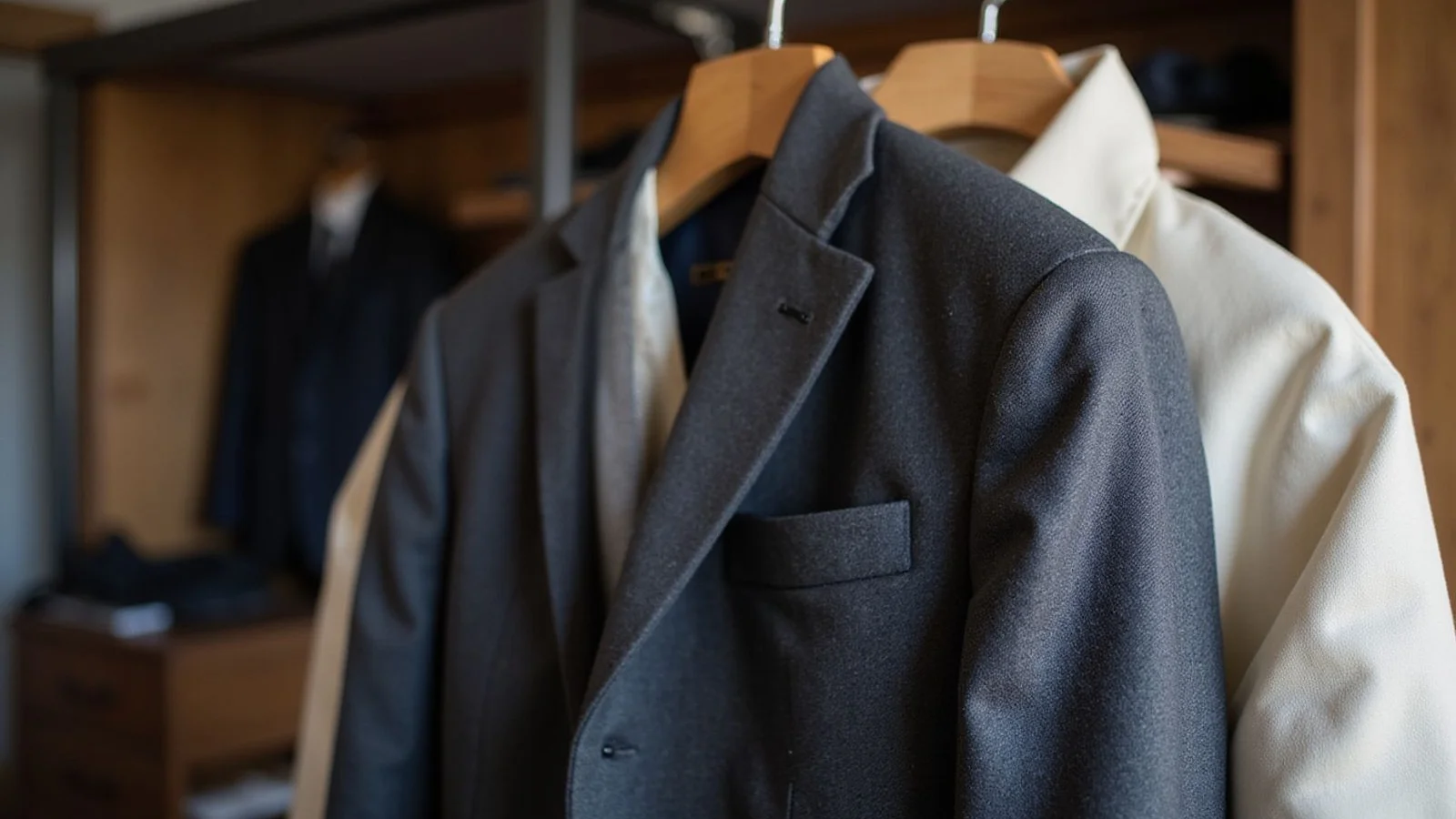
From what we have noticed in the custom clothing industry, a high-quality full-canvas suit easily lasts ten to twenty years. That longevity depends entirely on knowing exactly how to care for bespoke suits between wears.
Our experience shows that the rules for maintaining custom menswear are surprisingly simple and almost entirely free. Proper maintenance prevents premature wear and saves you significant replacement costs.
Let’s walk through the exact steps for daily brush care, the hidden risks of dry cleaning, and the proper way to store wool garments.
Brush and steam between wears
We recommend brushing your suit with a natural-bristle garment brush after every single wear, followed by targeted steaming only if wrinkles remain. This two-step process lifts destructive dirt out of the wool and relaxes the fibers without flattening the chest canvas.
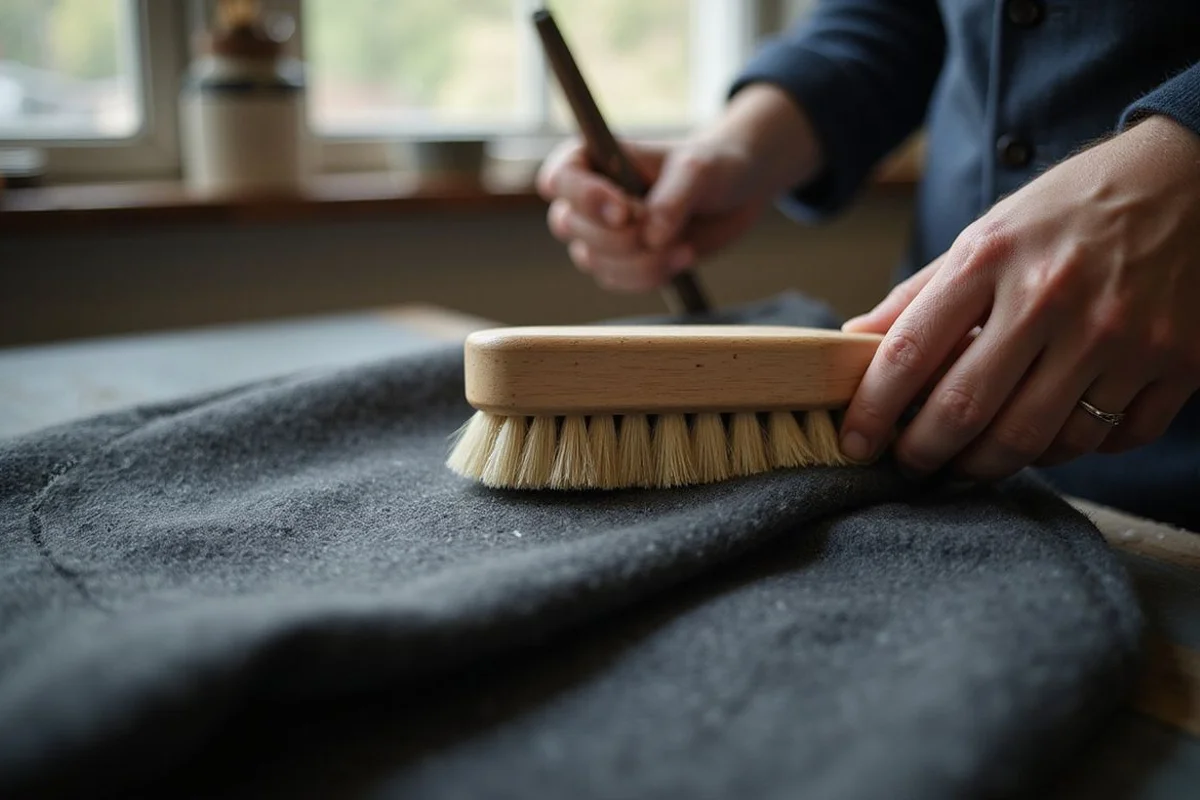
Dust and grit act like microscopic sandpaper inside wool fibers, causing them to break down over time. Our preferred tool for bespoke suit care is a 100% natural boar bristle brush, like the classic Kent CP6. Boar bristles are firm enough to lift out hidden debris but gentle enough to protect delicate fabrics like super-150s wool or cashmere. Synthetic brushes often scratch the fabric.
A quick routine takes less than a minute. Here is the exact daily care process:
- Empty the pockets completely, as heavy coins and receipts wear through pocket bags rapidly.
- Hang the jacket on a wide wooden shoulder hanger to prevent the delicate shoulder pad from collapsing.
- Brush the jacket with your natural-bristle tool, using five firm, sweeping strokes down each panel.
- Hang trousers on a clip hanger at the cuff so gravity naturally straightens the crease.
- Brush the trousers using the same downward sweeping motion.
We tell clients to step away from the iron entirely. Direct heat from an iron permanently crushes the internal canvas structure that gives your jacket its shape. Instead, utilize a dedicated garment steamer, like the industry-standard Jiffy J-2000, which operates safely at 212 degrees Fahrenheit. Holding the steamer head six inches from the cloth releases deep creases through moisture rather than pressure.
Dry cleaning: the enemy of longevity
We strongly advise against frequent chemical treatments. Clients frequently ask us how often to dry clean a suit, and the definitive answer is only when it has visible stains, lingering odors, or roughly every six to eight wears on a heavy rotation.
The standard dry cleaning process relies on harsh chemical solvents, particularly tetrachloroethylene, commonly known as PERC. Our local dry cleaning partners confirm that PERC degrades fabric strength with repeated exposure. The heavy industrial pressing machines used at most shops also compress the delicate floating canvas inside the jacket chest. This heavy pressing leaves a suit looking flat, shiny, and lifeless.
To understand the environmental and chemical impact, consider that Environment and Climate Change Canada tightly regulates PERC under the Canadian Environmental Protection Act due to its high toxicity. A custom garment that is steamed and brushed regularly can easily go twenty to thirty wears between cleans without looking tired. Minimizing chemical exposure is the best way to maintain the bounce and finish of your clothing.
We suggest establishing clear rules with a trusted cleaner when a wash is unavoidable. Cheap hotel dry cleaning services are a notorious cause of ruined jackets because they prioritize speed over care. You must explicitly request gentle treatment to protect the wool.
Ask for these specific treatments:
- No starch and no plastic bags, because wool naturally needs to breathe.
- Steam only, requesting that they avoid a full hard press where possible.
- Hand-finishing for the lapels to maintain their soft, rolled edge.
Rotation extends life
We emphasize that rotating your suits is mandatory because wool fibers have a natural memory and need time to recover their shape. Giving a suit at least twenty-four to forty-eight hours of rest between wears ensures it regains its proper drape.
Wearing the exact same trousers two days in a row accelerates surface abrasion exponentially. Our repair records show that a single daily-worn suit develops irreversible shine at the knees, seat, and elbows within just eight to twelve months. Wool fibers act like microscopic springs. They absorb moisture from your body and stretch out of shape by the end of the workday.
Resting the garment allows those fibers to release trapped humidity and spring back into their original woven position. A side-by-side comparison reveals exactly why resting your garments makes financial sense.
| Wear Frequency | Recovery Time | Expected Lifespan | Common Damage |
|---|---|---|---|
| Daily Wear | None | 8 to 12 months | Fabric shine, stretched elbows |
| Two-Suit Rotation | 24 hours | 2 to 3 years | Moderate seat wear |
| Three-Suit Rotation | 48+ hours | 10+ years | Minimal structural wear |
A rotation of three different suits costs three times as much upfront, but those garments will last significantly longer than three individual suits worn back-to-back. We highly recommend building a strategic rotation schedule for your workweek. This simple habit guarantees that you step out in a garment that always looks impeccably fresh.
Storage between seasons
We advise placing your off-season garments in breathable cotton garment bags within a temperature-controlled closet. Proper methods for storing wool suits prevent moth damage and stop trapped moisture from developing into destructive mildew.
Never store fine custom clothing in the plastic bags provided by dry cleaners. Plastic suffocates the natural fibers and traps ambient humidity inside the protective cover. Our preferred method for pest control is using solid Eastern red cedar blocks instead of chemical mothballs.
A 2026 Health Canada indoor air quality review explicitly warns against the active ingredient in mothballs, naphthalene. Naphthalene is a toxic compound that can cause respiratory irritation and leaves a caustic, lasting odor embedded in the wool. Cedar blocks naturally absorb excess closet moisture and repel pests safely. You just need to refresh the cedar annually by giving it a light sanding to release fresh oils.
We require clients to follow a strict preparation process before packing away winter flannels or summer linens. Here is the protocol for putting garments away safely:
- Clean thoroughly: Schedule one deep seasonal dry clean to remove invisible body oils.
- Air it out: Hang the suit in an open room for forty-eight hours to dissipate solvent odors.
- Use proper support: Keep the jacket on its wide wooden shoulder hanger.
- Bag it correctly: Zip the garment into a 100% cotton, breathable cover.
When to bring it in
We tell our clients to schedule a professional drape check at least once a year to master how to care for bespoke suits. Catching minor wear issues early costs very little and prevents small problems from ruining the suit.
An unnoticed loose horn button easily becomes a lost button in a dark restaurant. Finding a perfect color match for a lost vintage button can take weeks of sourcing. Our team routinely fixes these small mechanical issues during an annual tune-up.
Common early warning signs include:
- Loose button threading that requires reinforcing.
- Fraying at the trouser hem or jacket cuff.
- Slipping seams anywhere along the internal lining.
- Minor fabric pilling under the arms.
Catherine L. brings her late father’s vintage suits in annually on this exact principle. That consistent maintenance has kept them completely wearable for nearly a decade.
We handle major adjustments just as easily as minor repairs. For more substantial needs, such as a complete re-fit after a weight change, a modern trouser re-taper, or a pattern-on-file adjustment, book an appointment through our alterations service.
If you are just starting to build a custom wardrobe and wondering whether to invest in custom clothing at all, see our custom suits service and the comprehensive guide on what makes custom clothing different.
Common questions
How often should I dry clean a bespoke suit?
+
As infrequently as possible — typically after every six to eight wears, or sooner only if stained. Dry cleaning solvent and pressing both shorten the life of the chest canvas. Brushing and steaming between wears keeps most suits fresh far longer than most people realise.
Can I iron a bespoke suit at home?
+
Steam only. Direct iron contact flattens the canvas chest shape and creates shiny patches on the cloth. A handheld garment steamer is safe; a pressing ham and a damp pressing cloth are the traditional alternatives. For anything beyond a quick touch-up, bring it in.
Should I rotate suits?
+
Yes. Wool needs at least twenty-four hours to recover its drape between wears. Three suits in rotation last roughly three times as long as one suit worn daily — not because of weight, but because the fibres have time to rest.
More from this cluster
How a Suit Should Actually Fit: The 6 Points That Matter
The 6 fit points that determine whether a suit works: shoulder point, sleeve length, jacket length, trouser break, collar gap, waist suppression.
Decision stageHow to Find a Trustworthy Tailor in Victoria, BC
Questions to ask, red flags to watch for, and how to tell a real tailor from a retail alteration counter in Victoria BC.
InformationalThe Savile Row Method: Training, Tools, and Why It Matters
What Savile Row training really involves, how it differs from made-to-measure, and why it changes how a bespoke suit is drafted in Victoria BC.
Questions beyond what's here?
Free thirty-minute consultations on Fort Street. We'll answer your specific questions and give you a realistic quote.