What Is a Bespoke Suit?
True bespoke means a pattern hand-drafted uniquely for you, multiple fittings, no shared block. How it differs from made-to-measure, in plain English.
From what we see in our shop, the term custom gets thrown around far too casually these days. We often meet Canadian business owners who paid a premium for what they thought was top-tier craftsmanship. Unfortunately, they only received a standard garment with minor tweaks.
This confusion usually stems from the bespoke meaning suit marketers push to sell factory-made clothing.
Our goal is to clear up that confusion immediately. You deserve to know exactly what goes into genuine sartorial construction.
Let’s look at the data, what the creation process actually involves, and how to spot a fake. We are going to clarify exactly what is a bespoke suit and break down the specific features that separate it from typical made-to-measure garments. Then, the next step is to explore the exact fitting stages used by experts.
The defining feature: your own pattern
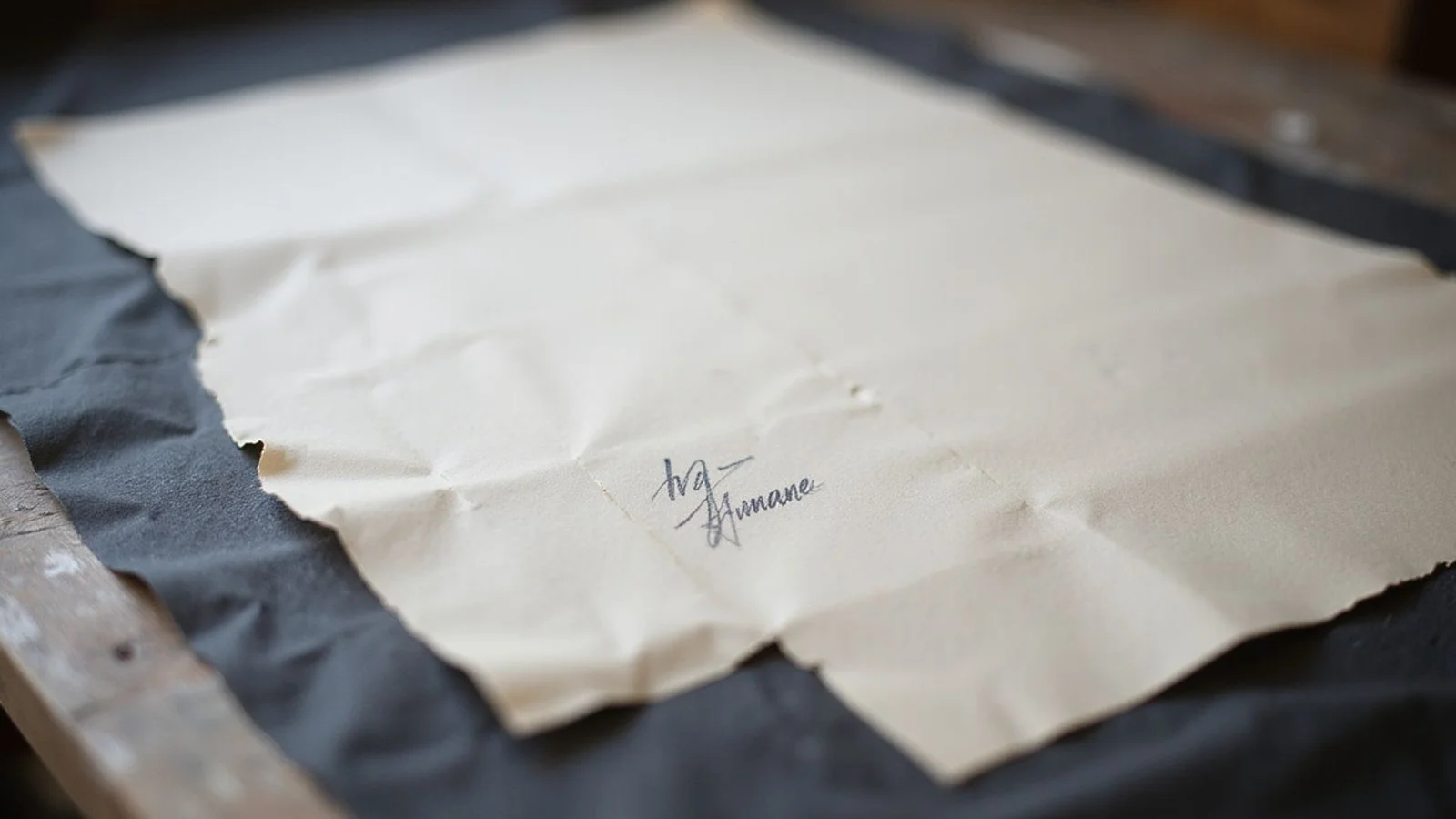
The single non-negotiable feature of a true bespoke suit is a paper pattern drafted uniquely for you. We retain this exact blueprint for your entire life. A master craftsman does not adjust a standard house block or scale up a size chart. Every single line is drawn on paper from your raw measurements.
Our fitting process typically involves taking between 35 and 40 distinct measurements. This level of precision is why Toronto establishments like London Bespoke Club highlight their extensive measurement protocols.
To give you an idea of the detail involved, these measurements go far beyond basic chest and waist numbers. We capture the nuances of your unique posture. Key data points include the shoulder slope for each side separately, your front-to-back stance, the drop from your chest to your waist, and your arm position at rest.
A second commission skips the drafting stage entirely. Our team finds this makes the second suit noticeably faster to produce. If you ever want a matching pair of trousers or a second jacket, the foundation is already complete.
- Asymmetrical Shoulder Slope: Accounts for the natural drop of your dominant arm.
- Crotch Depth and Rise: Ensures trousers sit perfectly whether you are standing or seated.
- Armhole Depth: Cut higher than rack options to allow full movement without pulling the jacket body.
- Postural Arch: Maps the exact curve of your spine to eliminate collar gaps.
Why the Paper Pattern Matters
Drafting a custom pattern takes serious expertise. We dedicate several hours just to creating this initial paper template. Off-the-rack garments are built for a statistical average that rarely exists in real life.
Your bespoke pattern is a literal map of your body. Our clients often tell us this changes how they feel in professional settings. A well-cut suit removes physical distractions during important meetings.
Multiple fittings, including basted
A bespoke suit requires a minimum of two fittings, but three is standard on a first order. We consider the basted fitting to be the most critical step. The jacket is assembled loosely with long white stitches that are easily pulled out.
You put the half-built jacket on. Our craftsmen then chalk every necessary adjustment directly onto the fabric. This includes changes to the shoulder, chest, waist suppression, sleeve pitch, and collar height.
Constructing a garment at this level requires immense labor. We invest between 25 and 50 hours of handwork into a single jacket. For context, master clothiers in Canada report spending up to 50 hours constructing a fully handmade piece.
The basted fitting is the step that factory production simply cannot offer. Our process allows us to completely take the jacket apart and resew it to the new shape. Once a factory jacket is sewn, the drape is permanently locked in place.
| Feature | True Bespoke Basted Fitting | Factory Made-to-Measure |
|---|---|---|
| Construction State | Loosely stitched with removable basting thread | Fully sewn and finished |
| Adjustability | Unlimited structural changes | Minor tweaks to seams only |
| Canvas | Hand-stitched floating canvas | Often glued or machine-stitched |
| Shoulder Pitch | Completely adjustable during fitting | Locked in at the factory |
What “bespoke” often isn’t
In marketing copy, the label frequently describes what is more accurately made-to-measure. We see many shops offering a pre-existing block adjusted by an algorithm. They offer a single fitting and outsource the construction overseas.
That product can be good, as a well-fitting made-to-measure suit is better than a bad rack suit. Our job is simply to help you spot the difference so you know what you are paying for.
Pricing is a massive indicator of the construction method. We know that in 2026, an entry-level made-to-measure suit in Canada costs around $800 CAD. Meanwhile, genuine custom construction from a top Canadian brand starts around $3,500 CAD.
You should look for two specific tells to identify the real deal. Our top warning sign is a shop that does not retain a physical paper pattern for you.
- Pattern: If the shop does not retain a paper blueprint for your specific body, it is not custom construction.
- Basted fitting: If your first fitting is of a finished jacket rather than a loosely basted garment, you are buying made-to-measure.
For the full three-way comparison see bespoke vs made-to-measure vs off-the-rack.
The six-step client experience
Creating a custom garment is a structured journey. We follow a distinct six-step process to ensure exact specifications are met.
The entire timeline takes six to eight weeks from the first fitting to delivery on a first order. Fabric availability can sometimes shift this schedule. Our partnerships with top mills mean premium wools are always accessible.
- Consultation (free, 30 min). Discuss style, occasion, budget, and timeline.
- Measurement (45 min). Capture 35 to 40 data points and complete the fabric walk-through.
- Drafting and cutting (2 to 3 weeks). The pattern is drawn by hand and the cloth is cut.
- Basted fitting. The half-built jacket is tried on and reshaped based on your posture.
- Construction (2 to 3 weeks). Intensive hand-work on the canvas, lapels, buttonholes, and sleeve sets.
- Final fitting and delivery. Minor adjustments are executed, the garment is pressed, and you take it home.
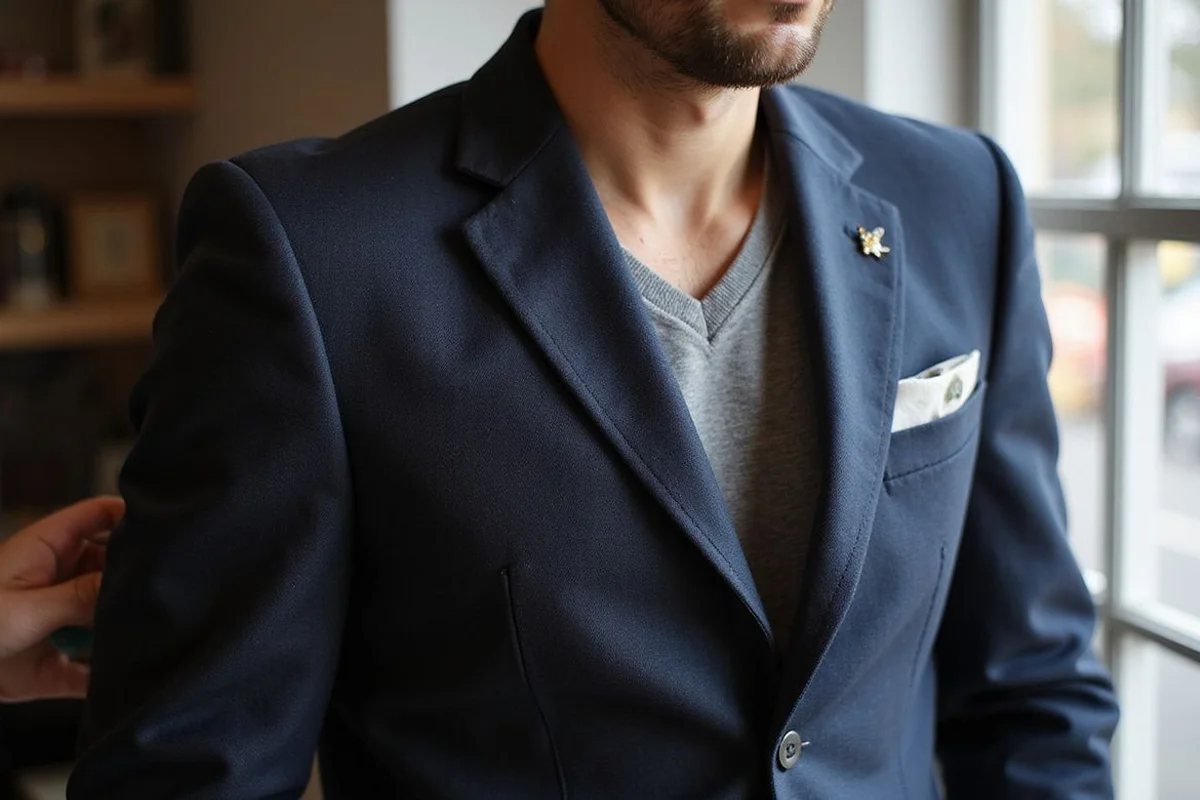
Detail in the bespoke suit process step by step.
Honest note, when bespoke isn’t the right call
This level of clothing is not always the right answer. We regularly advise clients against it if they have a short timeline.
If your body is close to standard proportions, a high-quality made-to-measure option might be perfectly fine. This is especially true if this is your first custom garment and you are not sure yet what you want. Our team has sent clients down that path more than once.
A true custom suit is worth the premium under specific conditions. We strongly recommend it when off-the-rack clothing has never fit your shoulders, chest, or drop properly.
It is also the best choice if you want a long-term wardrobe. Business owners get an excellent return on investment because a handmade suit can last 10 to 20 years with proper care. Our clients truly value the cloth, the construction, and the relationship with the maker.
- You require distinct sizing differences between your upper and lower body.
- You have an asymmetrical shoulder slope or a unique postural arch.
- You view clothing as a ten-year investment rather than a seasonal purchase.
- You require specific fabric weights for regular international business travel.
If you fit into that category, book a consultation through our bespoke suits service. The first conversation costs nothing and sets the foundation for your next great suit.
Common questions
Is bespoke always better than made-to-measure?
+
Not always. Made-to-measure can be sufficient for standard body types, first-suit buyers, or tight budgets and timelines. Bespoke is worth the premium for hard-to-fit bodies, long-term wardrobes, and clients who value the craft.
Do all bespoke tailors make the pattern on-site?
+
They should. A workshop that outsources pattern-making is effectively running made-to-measure — the pattern is the defining feature of bespoke.
How many fittings does a true bespoke suit need?
+
A minimum of two — the basted fitting and the final. Three is normal on a first order for a new client.
More from this cluster
Bespoke Suit Cost in British Columbia
BC bespoke pricing: $1,800 everyday British wool through $4,500 flagship Italian. What drives cost, Vancouver comparisons, payment structure.
InformationalThe Bespoke Suit Process: Step by Step
Consultation, measurement, fabric, basted fitting, final fitting, delivery — every stage, what you do, and what the workshop does in between.
InformationalBespoke Suits for Hard-to-Fit Bodies
Broad shoulders and narrow waist? Short stature? Asymmetric shoulders? How hand-drafted bespoke addresses each — and realistic expectations.
Decision stageBespoke vs Made-to-Measure vs Off-the-Rack: What's the Real Difference?
Side-by-side comparison of pattern source, fittings, construction, price, and turnaround — and an honest take on which tier is right for which buyer.
Questions beyond what's here?
Free thirty-minute consultations on Fort Street. We'll answer your specific questions and give you a realistic quote.