Canvas Construction Explained
The interior canvas shapes a jacket's chest. Full canvas drapes, half canvas compromises, fused cracks over time. How to identify each.
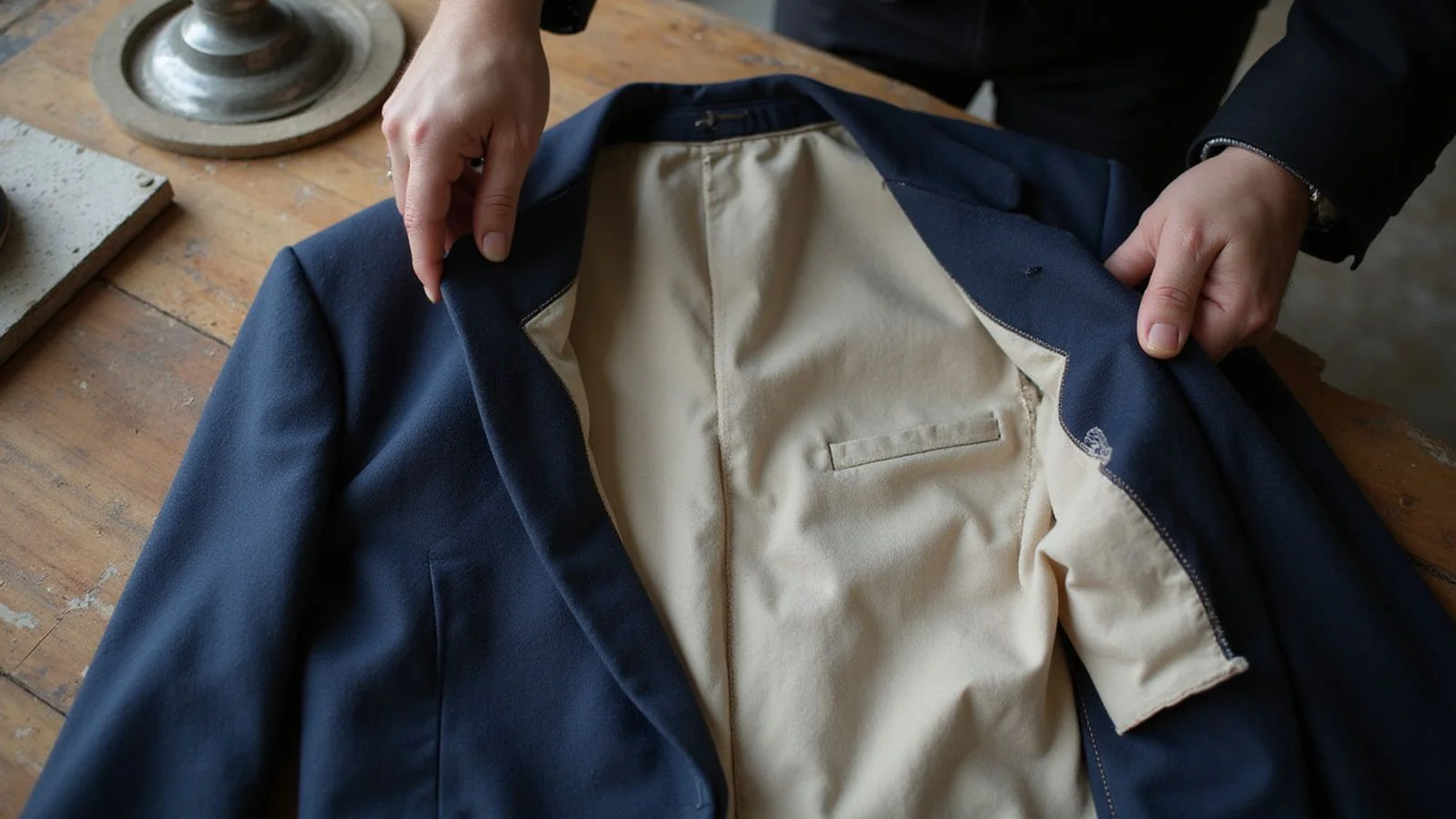
From what we have seen working with business owners, the real value of a garment is hidden beneath the surface. You expect a solid foundation when investing in property, and your wardrobe requires that same standard.
The secret to a jacket that looks professional for decades is a proper canvas construction suit. This interior canvas layer sits right between the outer cloth and the inner lining.
We see clients constantly frustrated by jackets that lose their shape after just a few trips to the dry cleaner. The construction method dictates whether your purchase lasts twenty years or falls apart in six months.
Let’s examine the three main structural methods, what the data says about longevity, and how to verify what you are actually buying.
The three constructions
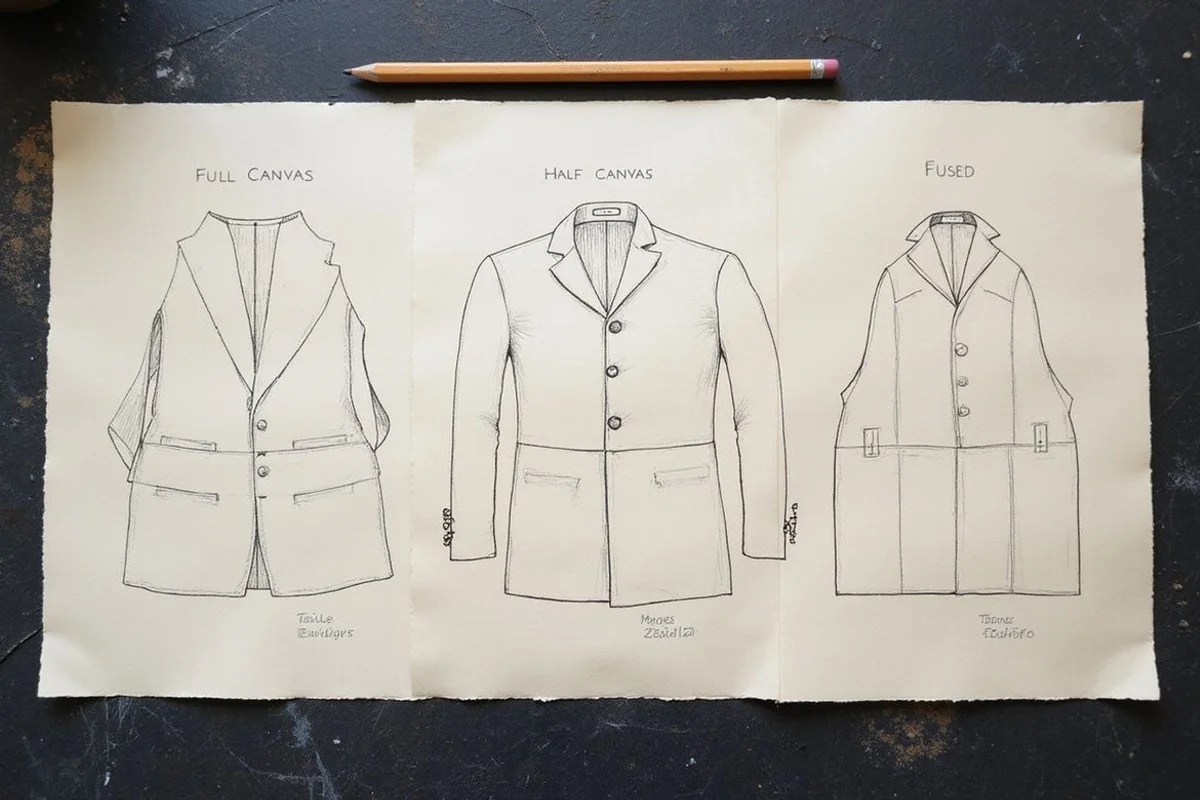
The three main methods of jacket construction are full canvas, half canvas, and fused. These techniques determine how the layers of your garment are attached and supported.
Full canvas
A traditional full canvas jacket uses a natural blend of horsehair and wool. Manufacturers pad-stitch this layer directly to the front cloth, allowing it to float freely between the exterior and the lining. We find that avoiding synthetic glues completely is the best way to ensure maximum breathability.
Full canvas construction provides several distinct advantages:
- Shapes to your body perfectly over the first six months of regular wear.
- Allows air to flow freely, keeping you comfortable during humid Canadian summers.
- Features a lifespan of ten to twenty years with proper brushing and resting.
- Costs upwards of $1,500 CAD due to the skilled hand-stitching required.
Because the canvas acts like a structural skeleton, it drapes naturally when you move. You can actually have this layer hand-shaped during a basted fitting.
Half canvas
This method offers a middle ground for professionals balancing budget and quality. The canvas material runs from the shoulder down through the chest, but it stops above the waist. Below that midpoint, factories use a glued synthetic interlining.
Our team often recommends this for occasional wearers. When comparing a full canvas vs half canvas suit, the decision usually comes down to your budget and wear frequency. You get the natural drape across the chest and lapels without the premium price tag.
Half canvas characteristics include:
- Costs between $600 and $900 CAD on average.
- Delivers about 60 percent of the drape benefits found in a floating canvas jacket.
- Provides a reasonable compromise for lower-priced custom garments.
- Remains vulnerable to bubbling in the lower chest area after repeated chemical cleaning.
Fused
Factories use heat and pressure to ensure a synthetic interlining is glued directly to the front cloth. If you have ever searched for the fused suit meaning, it simply refers to garments built entirely with synthetic adhesives instead of a sewn interior. We advise clients to view these as short-term garments.
Fused jackets are the standard for off-the-rack items priced under $1,000 CAD. The fabric feels stiff because the cloth and the glue move as one solid piece. Synthetic adhesives also trap body heat, severely limiting airflow.
“A fused jacket is essentially glued together, meaning the harsh heat and chemicals from dry cleaning will quickly melt the adhesive and ruin the garment.”
The most critical flaw is the inevitable bubbling effect. Once exposed to chemicals three to six times, the glue fails and the chest bubbles after dry cleaning. The front cloth separates into small, irregular puffs. This damage destroys the garment entirely, usually limiting its lifespan to just six to 18 months of regular use.
How to identify each: the pinch test
You can determine the construction method of any jacket using a simple tactile check. The pinch test reveals whether the internal structure is floating or glued.
Walk up to any jacket on a hanger. Grip the front of the chest panel just below the collarbone between your thumb and forefinger. Use your other hand to pinch the lining directly behind that exact spot. Gently pull the two sides apart and try to move them independently.
Here is what you should feel:
- Three distinct layers that move separately: You will feel the outer cloth, a slightly rough floating interlayer, and the smooth lining. This indicates full or half canvas.
- Two layers stuck together that move as one stiff sheet: The outer cloth and the inner support feel completely bonded against the lining. This confirms a fused jacket.
We do this automatically whenever assessing a garment. Once you try this technique on a few different jackets, the entire process takes about five seconds.
Why canvas is worth paying for
A premium floating interior provides two major practical wins: superior drape and longevity. Business owners understand that buying quality upfront often saves money over a decade.
Drape might seem subjective at first, but the difference is obvious when you test garments side-by-side. A proper jacket curves naturally with your chest as you breathe. The fabric lifts smoothly when you raise your arm and settles perfectly flat when you lower it. A glued jacket performs the same movements with a noticeable lag. The cloth pulls against the adhesive layer, restricting your natural mobility.
We look at the math to justify the initial expense. A $600 CAD glued jacket that requires replacement every 18 to 36 months becomes a recurring liability. You will spend over $2,000 replacing cheap garments over a fifteen-year period. A $2,800 CAD custom full-canvas jacket worn in a proper rotation will easily last those entire fifteen years. The annual cost of ownership converges much faster than most buyers realize.
| Feature | Fused Jacket | Full Canvas Construction |
|---|---|---|
| Average Cost (CAD) | $300 - $1,000 | $1,500 - $3,000+ |
| Lifespan | 1 to 3 years | 10 to 15+ years |
| Breathability | Poor (Glue traps heat) | Excellent (Natural fibers) |
| Dry Cleaning Risk | High (Bubbles quickly) | Low (Maintains shape) |
What we use
Every single bespoke suit our shop produces features a full floating interior by default. We prioritize this traditional method because it guarantees the durability our clients expect.
A half-canvas option remains available upon request for individuals seeking a specific lower price point. Our workshop refuses to produce glued garments under any circumstances. That synthetic construction is completely incompatible with the basted-fitting process that defines our professional standards.
If you are evaluating different shops in Victoria, BC, you need a quick way to gauge their expertise. When vetting a local workroom, ask these specific questions:
- Do you use a fully floating horsehair interior?
- Is the canvas glued or pad-stitched?
- Do you offer a true basted fitting?
Asking these questions immediately separates a serious shop from a retail measurement operation. Read our complete guide on how to choose a bespoke tailor to access a broader vetting checklist before making your next investment.
Common questions
Can I tell if a suit is fused without cutting it open?
+
Yes — the pinch test. Pinch the chest cloth and the lining separately between your fingers. If they move independently (with a loose third layer between them), it has a floating canvas. If they feel stuck together as one stiff piece, it is fused.
Do we make half-canvas suits?
+
Rarely. Our standard bespoke is full canvas because the cost delta for a floor canvas from the basted stage is small. Half canvas is available on request at a slightly reduced price for clients who specifically want it.
How long does a full canvas suit last?
+
With rotation and proper care, ten to twenty years. Most wear happens at the trousers, not the jacket — trousers have a shorter life, but the jacket can often outlast two or three pairs of matching trousers.
More from this cluster
Bespoke Suit Cost in British Columbia
BC bespoke pricing: $1,800 everyday British wool through $4,500 flagship Italian. What drives cost, Vancouver comparisons, payment structure.
InformationalThe Bespoke Suit Process: Step by Step
Consultation, measurement, fabric, basted fitting, final fitting, delivery — every stage, what you do, and what the workshop does in between.
InformationalBespoke Suits for Hard-to-Fit Bodies
Broad shoulders and narrow waist? Short stature? Asymmetric shoulders? How hand-drafted bespoke addresses each — and realistic expectations.
Decision stageBespoke vs Made-to-Measure vs Off-the-Rack: What's the Real Difference?
Side-by-side comparison of pattern source, fittings, construction, price, and turnaround — and an honest take on which tier is right for which buyer.
Questions beyond what's here?
Free thirty-minute consultations on Fort Street. We'll answer your specific questions and give you a realistic quote.