The Bespoke Suit Process, Step by Step
Consultation, measurement, fabric, basted fitting, final fitting, delivery — every stage, what you do, and what the workshop does in between.
As business leaders and property owners, you appreciate that true quality requires a deliberate process.
A fully bespoke suit takes about six to eight weeks from your first fitting to the final delivery. This timeframe is essential because an average of 55 man-hours goes into crafting a garment built exclusively for your body.
Our team designed this timeline to respect your busy schedule while ensuring uncompromising craftsmanship. Understanding the complete bespoke suit process prepares you for the journey ahead.
Let’s break down the specific bespoke suit steps, what actions you need to take, and the manual work happening behind the scenes.
Week 0 - Consultation (30 min, free)
Your initial consultation is a relaxed, thirty-minute conversation to define the purpose and styling of your new suit. During this free appointment, you outline your fabric preferences, budget, and timeline with zero pressure to make immediate decisions.
We sit down at a dedicated table, avoiding the rushed feel of a retail counter. Discussions often touch on specific needs, like choosing a resilient 280-gram wool for daily corporate wear or a breathable linen for summer events.
Our goal is to simply gather the necessary information to produce an accurate quote by the end of the hour. For further details on how this meeting flows, review what to expect at your first bespoke fitting.
| Your Role | Our Role |
|---|---|
| Book the appointment and arrive in your best-fitting current suit or shirt. | Listen closely, sketch preliminary designs, and present sample jackets. |
| Bring any reference garments or photos you want to replicate. | Review Canadian wool and Italian fabric swatches, then provide a full quote. |
Week 1 - Measurement + fabric selection (45 min)
The measurement and fabric selection phase requires forty-five minutes to record your exact bodily proportions and finalize your material choices. This step locks in your build sheet, initiating the drafting of your personal pattern.
We record up to 37 unique measurements during this session. This comprehensive pass captures critical details that off-the-rack sizing ignores, such as your natural stance, shoulder slope, and arm pitch.
You then select your preferred material from an on-site library featuring premium British wool, Italian blends, and warm Canadian wool. Our tailors finalize the exact style details, including lapel widths, vent placements, and trouser cuffs. A fifty percent deposit secures your order.
| Your Role | Our Role |
|---|---|
| Stand naturally while speaking about your daily comfort preferences. | Measure your posture, shoulder balance, and standard dimensions. |
| Select your fabric, confirm pocket styles, and pay a 50% deposit. | Lock in the final build sheet and begin drafting the foundation pattern. |
Weeks 2-3 - Pattern drafting and cutting
During weeks two and three, your measurements are translated into a unique paper pattern drafted entirely from scratch. This custom blueprint is then used to cut the actual fabric by hand.
Our master tailor drafts this foundation pattern freehand using traditional tools like setsquares, French curves, and measuring scales. Each shoulder slope requires a separate draft to account for your body’s natural asymmetries. The resulting pattern yields twelve to fifteen individual pieces, including the front panels, sleeves, collar, and internal canvas.
Key steps in the drafting phase:
- Drafting the Block: Translating your 37 measurements onto heavy pattern paper.
- Separating the Components: Cutting the master block into specific sections for the front, back, lining, and collar.
- Chalking the Fabric: Pinning the paper to your selected cloth and tracing the exact outlines with tailor’s chalk.
- Hand-Cutting: Shearing the cloth by hand to guarantee perfect proportions across all seam allowances.
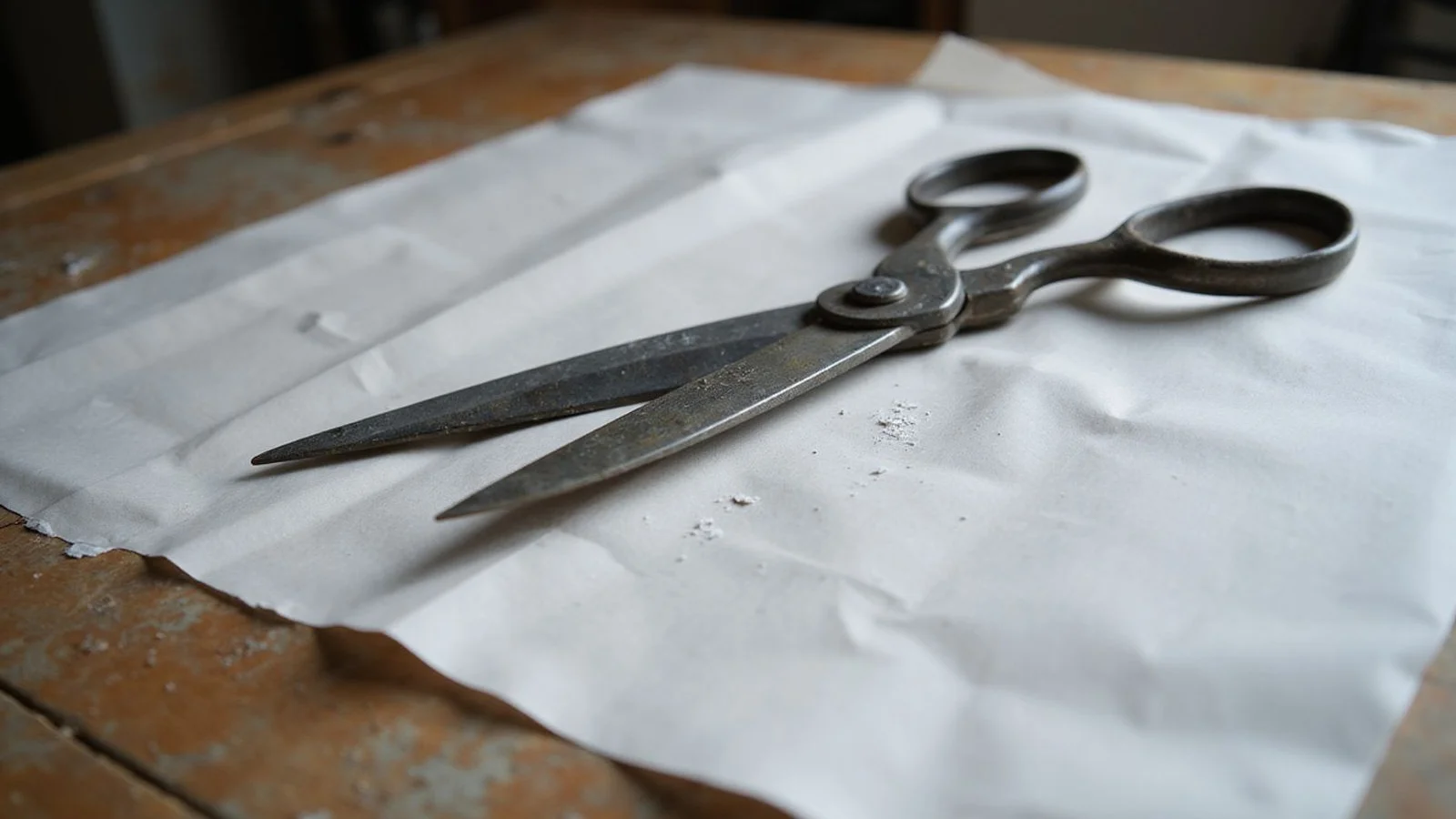
We carefully lay your chosen cloth on the cutting table once the paper draft is complete. Heavy shears are used to cut the pieces manually, which provides superior control compared to factory machine cutting.
Your only job during this period is to wait for the call scheduling your first fitting. Our staff handles the loose assembly, tacking the jacket together with white basting thread.
Week 4 - Basted fitting (30-45 min)
The basted fitting is a critical thirty-to-forty-five-minute session where you try on a loosely assembled version of your suit. This allows the tailor to evaluate the balance and drape before any permanent seams are sewn.
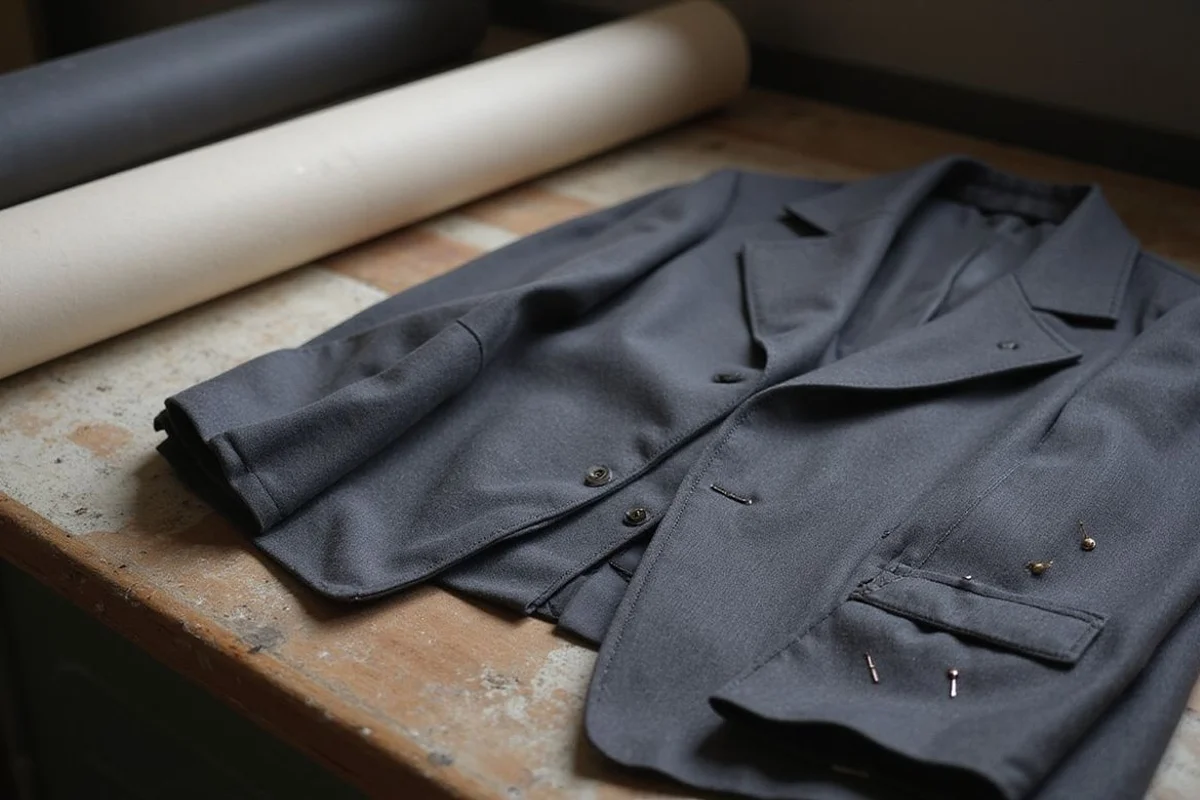
You will put on a half-built jacket held together solely by temporary white basting thread. The internal horsehair and linen canvas feels loose, and the lining remains unattached. Our fitting specialists leave the garment in this unfinished state deliberately, providing the flexibility to radically reshape the structure.
Adjustments we evaluate and chalk include:
- Shoulder seam positioning: Assessed left and right separately for perfect alignment.
- Chest drape and waist suppression: Ensuring the canvas molds smoothly to your torso.
- Collar height and gap: Preventing any unsightly lifting around the neck.
- Sleeve pitch: Aligning the armhole rotation with your natural resting arm angle.
- Jacket length: Finalizing the hem before the bottom is finished.
We take the jacket completely apart after this fitting and resew it according to the new chalk marks. This stage represents your final opportunity to adjust the core silhouette.
| Your Role | Our Role |
|---|---|
| Put on the jacket, stand naturally, move your arms, and sit down. | Pin, chalk, and measure any necessary structural corrections. |
| Communicate exactly what feels tight, loose, or out of place. | Rebuild the entire core structure based on your direct feedback. |
Weeks 5-7 - Construction
The construction phase transforms the adjusted basted pieces into a finished, highly detailed garment over two to three weeks. This quiet, labor-intensive period accounts for the bulk of the 55 man-hours required for your suit.
Our coat-makers employ classic techniques to ensure longevity and superior movement. The most important invisible feature is the floating canvas construction. Unlike mass-produced alternatives that glue an interlining to the fabric, a genuine custom jacket utilizes thousands of tiny hand-stitches to secure the canvas. This allows the internal layer to move independently, molding to your specific body shape over the years.
Key construction details completed during this phase:
- Hand-rolling the lapel: Pad-stitching creates a permanent, elegant curve rather than a flat, lifeless press.
- Setting the sleeves: Carefully attaching the arms to allow maximum mobility without pulling at the chest.
- Hand-stitched buttonholes: Crafting durable, functional sleeve buttons using dense silk thread.
- Trouser architecture: Building the floating canvas waistband, fly, pockets, and optional side adjusters.
You have no tasks to complete during these weeks. We handle all the precise hand-finishing and pressing required to prepare the suit for delivery. This is exactly how bespoke tailoring works, combining precise handcrafting with premium materials.
Week 8 - Final fitting and delivery (30 min)
The final fitting is a thirty-minute appointment to verify the finished suit drapes perfectly across your shoulders and waist. You will try on the fully constructed garment, pay the remaining balance, and take your new clothing home.
Our tailors conduct a comprehensive final check of the hand-stitched details and overall balance. Upgrading to natural horn or corozo nut buttons guarantees durability, avoiding the cracking commonly seen with plastic alternatives.
Minor alterations can often be handled on the spot or within twenty-four hours. These fine-tuning steps include:
- A fractional sleeve cuff adjustment.
- A slight change to the trouser hem length.
- A final lapel press.
The suit receives a master press before being carefully bagged in breathable cotton, completely avoiding synthetic plastic covers.
After delivery
Once your first order is complete, your unique paper pattern is safely archived in the workshop for life. This permanent record significantly accelerates any future clothing commissions you make.
Second and subsequent orders skip the initial drafting phase entirely, shaving roughly two weeks off the standard timeline. Future projects offer several advantages:
- Faster turnaround: Skipping the measuring and drafting steps.
- Fewer appointments: Typically requiring only a single fitting.
- Consistent fit: Leveraging the perfectly tuned master pattern on file.
If you want to know how long the second suit takes, see how long does a bespoke suit take. We highly recommend learning proper maintenance to protect your investment.
Care instructions for your new suit are in caring for your custom garments. Simple habits, like brushing the wool and using proper wooden hangers, dramatically extend the garment’s lifespan.
To start the process, book a consultation through our bespoke suits service.
Common questions
What does the client do between the first appointment and the basted fitting?
+
Nothing. The workshop is drafting, cutting, and basting. The next visit is ours to schedule — you will be called when the basted jacket is ready.
Can I change my mind on fabric after the consultation?
+
Yes, up until cutting. Once the cloth is cut, it cannot be swapped without restarting. We confirm the fabric choice on a second touch before cutting.
What happens if I lose or gain weight mid-process?
+
Tell us early. Most small changes can be absorbed at the basted or final fitting. Significant changes (more than about fifteen pounds) may require a pattern redraw.
More from this cluster
Bespoke Suit Cost in British Columbia
BC bespoke pricing: $1,800 everyday British wool through $4,500 flagship Italian. What drives cost, Vancouver comparisons, payment structure.
InformationalBespoke Suits for Hard-to-Fit Bodies
Broad shoulders and narrow waist? Short stature? Asymmetric shoulders? How hand-drafted bespoke addresses each — and realistic expectations.
Decision stageBespoke vs Made-to-Measure vs Off-the-Rack: What's the Real Difference?
Side-by-side comparison of pattern source, fittings, construction, price, and turnaround — and an honest take on which tier is right for which buyer.
Decision stageBritish Wool vs Italian Wool: Choosing Your Suit Fabric
Weight, drape, durability, and climate fit for Victoria's damp cool seasons. Mills from each tradition, plus Irish linen and Canadian options.
Questions beyond what's here?
Free thirty-minute consultations on Fort Street. We'll answer your specific questions and give you a realistic quote.