British Wool vs Italian Wool
Weight, drape, durability, and climate fit for Victoria's damp cool seasons. Mills from each tradition, plus Irish linen and Canadian options.
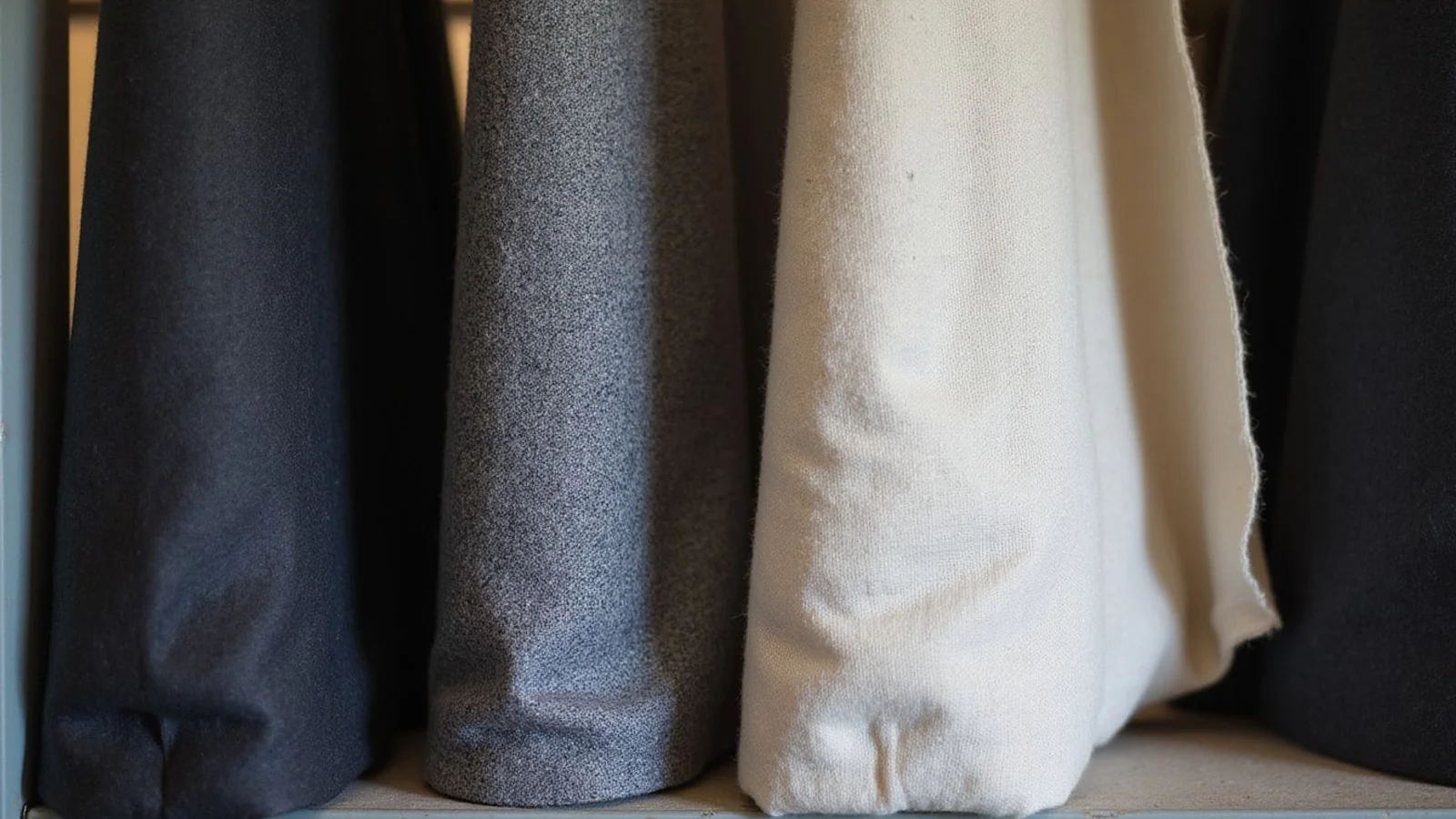
We often see clients get entirely overwhelmed by the sheer volume of fabric swatches during their first fitting. Choosing a british wool vs italian wool suit is usually the biggest hurdle.
That choice dictates exactly how your garment will perform over the next decade.
You know how a beautiful, lightweight summer jacket can look perfectly sharp on the hanger but turn into a rumpled mess after a single flight? That is the exact problem a proper suit fabric comparison solves.
We will break down the precise differences between the structured English mills and the fluid Italian weavers. Let’s look at the hard data behind fabric weights, compare durability, and map out the best choices for the damp climate here in Victoria.
The short version
The fastest way to understand english wool italian wool differences comes down to weight and structure. British cloth provides a crisp, durable armor, while Italian cloth offers a soft, fluid second skin.
We rely on this quick reference guide to help clients narrow down their choices before we even open the swatch books. The exact specifications below highlight why each tradition excels in completely different environments.
| Attribute | British worsted | Italian wool |
|---|---|---|
| Weight | Heavier (10 to 13 oz) | Lighter (8 to 11 oz) |
| Hand | Drier, crisper, more structured | Softer, more fluid |
| Drape | Holds its shape, sharp lines | Follows the body, fluid drape |
| Durability | Excellent for daily wear | Declines above Super 130s |
| Climate | Outstanding in cool and damp | Excellent in warmer, drier |
| Mills | Holland & Sherry, Dormeuil | VBC, Loro Piana, Zegna |
| Typical use | Business, court, winter | Summer, travel, lighter business |
For a baseline, the famous Loro Piana Tasmanian Super 150s fabric weighs around 8 ounces. A workhorse English travel cloth like Holland & Sherry Crispaire typically weighs 9 to 11 ounces.
British worsted: the workhorse
British suiting is woven from long-staple worsted wool. These long fibres are combed and twisted tightly before weaving, producing a dry, crisp cloth that holds its shape.
We always recommend this structured cloth for clients who need a garment to look pristine after a twelve-hour workday. The heavy twist creates a natural armor against wrinkles.
Key Characteristics
- Weight: 10 to 13 oz is standard, and winter cloths can easily push to 14 oz.
- Drape: Highly structured lines that stand slightly away from the body.
- Durability: Exceptional longevity for daily rotations.
- Moisture: Sheds water and breathes beautifully even at higher weights.
Our preferred English mills produce some of the most reliable textiles on the planet.
- Holland & Sherry: Their “Crispaire” line is the premier business travel fabric. It uses a 2-ply high-twist yarn spun to a 36/2nm count, weighing between 9 and 11 ounces (280 to 310g) for legendary crease recovery.
- Dormeuil: This French-owned mill has deeply English roots. Their 310g (10.5 oz) “Amadeus” cloth features a unique paper-press finish that delivers a subtle luster without losing its structured heritage.
This category remains the absolute best choice for daily business wear in Victoria’s climate. Court attire needs to look composed through long days, and heirloom commissions require true longevity.
Italian wool: fluid, lighter, more fashion-forward
Italian mills spin finer yarns and weave significantly lighter cloth. The direct result is a softer hand and a drape that elegantly follows your body rather than standing away from it.
We see a huge demand for these fabrics when clients want a garment that feels like a second skin. They trade structural armor for pure, breathable comfort.
Key Characteristics
- Weight: 8 to 11 oz is the standard baseline. Super-fine ranges (150s and above) can drop to a feathery 7 oz.
- Drape: Fluid movement that breathes with you.
- Durability: Excellent up to Super 130s, but daily wear produces noticeable friction faster on finer grades.
- Climate: Unbeatable for warmer days, over-heated offices, and global travel.
The signature mills we feature represent the absolute pinnacle of this lightweight tradition.
- Vitale Barberis Canonico (VBC): Operating since 1663 as the world’s oldest woolen mill, they provide the everyday Italian premium standard. Their Super 150s “Revenge” line is an outstanding, luxurious workhorse.
- Loro Piana: This is the flagship innovator. Their famous “Tasmanian” Super 150s fabric, originally developed in the 1980s, weighs a mere 250 grams (about 8 oz) per meter and uses ultra-fine 15-micron wool with a natural stretch.
- Ermenegildo Zegna: Known for their “Trofeo” line. They use award-winning Australian raw wool to weave a 240g cloth that provides a regal, masculine drape even in simple navy.
These textiles are best reserved for warm-weather wear, travel, and summer weddings. Save them for occasion rotations rather than five-day-a-week wardrobes.
Victoria climate considerations
Victoria features a cool and temperate coastal climate that heavily influences how textiles perform. The air holds significant moisture year-round.
We explicitly warn clients against ignoring local weather data when planning a daily rotation. Victoria averages an 83% to 87% relative humidity during the damp winter months like January and December.
The Local Weather Impact
Our city experiences very specific seasonal shifts:
- Damp winters sit between 5 and 10°C with frequent rain and high humidity.
- Cool springs and autumns hover around 10 to 15°C.
- Warm summers peak at 20 to 25°C, rarely crossing 30°C.
- Strong marine winds constantly blow off the Inner Harbour.
This dampness heavily favors structured English worsteds for daily wear. Taking a delicate 7-ounce Super 150s Italian fabric into an 83% humidity winter means the cloth will absorb moisture, lose its shape, and break down prematurely.
A heavier 10 to 13 oz high-twist worsted easily resists this coastal moisture and holds a sharp center crease. You can absolutely wear lighter Italian cloth in the summer, or if you drive directly to a climate-controlled office.
The most common mistake we see is buying a Super 150s Italian suit as a daily driver simply because it reads as premium on the swatch. The cloth is excellent, but it lacks the durability required for daily wear in a damp marine environment.
Irish linen
Irish linen provides the perfect solution for Victoria’s warm summers and outdoor July weddings. It is woven from pure Irish flax into a highly breathable, crease-forgiving cloth.
We stock premium linen because it handles heat better than any synthetic blend on the market. Linen does wrinkle, but that texture is expected and forms a massive part of the fabric’s authentic character.
Why Weight Matters in Linen
You might assume that the lightest possible fabric is best for summer heat. In reality, a heavier linen actually performs much better.
- Superior Drape: A substantial 12 to 14 oz (380g) fine Irish linen hangs away from the body, allowing cooling air to circulate.
- Better Wrinkles: Heavy linen resists the sharp, messy creases that plague lighter fabrics, developing elegant “rumples” instead.
- Longevity: Dense flax fibers grow softer and develop a beautiful patina over decades of wear.
Our collection includes authentic options from W. Bill, a legendary UK supplier, who weaves a sturdy 14 oz cloth that looks better with every single outing. Partnering with mills like Baird McNutt allows us to also offer an iconic 8 oz (240gsm) option that is perfectly suited for a humid garden reception.
A well-cut linen jacket remains the absolute pinnacle of relaxed, summer elegance.
Sustainable and Canadian options
Clients increasingly ask for sustainable, locally milled fabrics with a transparent supply chain. A rotating selection of Canadian-sourced wool is available on request in our studio.
We proudly support the domestic “Fibreshed” movement, which focuses on regenerative agriculture and hyper-local production. This approach dramatically lowers the ecological impact of your wardrobe.
The Domestic Difference
Canadian wool is undeniably heavier and slightly less refined than a silky Super 150s import. However, the sheer durability and short supply chain make it an incredible choice for heavy winter topcoats or rugged country jackets.
- Custom Woolen Mills: Located in Alberta, they have operated for over 40 years using historic turn-of-the-century machinery to process raw local fleece.
- Wave Fibre Mill: Based in Ontario, they create highly durable, climate-beneficial textiles directly from small partner farms.
Availability changes constantly based on the shearing season. Just ask about our domestic stock during your initial fitting.
Pricing implications for a british wool vs italian wool suit
Fabric tier serves as the single biggest driver of the final price tag on a custom suit. Upgrading from a standard business cloth to a rare, low-micron luxury fiber fundamentally changes the investment.
We always remind clients to calculate their true cost per wear. An entry-level British worsted suit might cost $1,800, but its dense, high-twist weave means it will easily survive ten years of weekly rotation.
Comparing holland and sherry vs loro piana often comes down to balancing extreme durability against unmatched softness. You can review the full economic breakdown in our complete guide to bespoke suit cost in British Columbia.
General Pricing Tiers for 2026
- $1,800 tier: Everyday British wool like the Holland & Sherry entry cloth. This is your high-ROI daily armor.
- $2,800 tier: Premium Italian fabrics, including VBC Revenge and Loro Piana Four Seasons. These offer noticeable softness upgrades.
- $3,600 tier: Heritage mills and complex finishes, such as the Dormeuil Tonik and Zegna Trofeo.
- $4,500 tier: The absolute flagship materials, including Loro Piana Super 150s and the ultra-rare Dormeuil 15-micron collections.
To feel the distinct weight difference of a british wool vs italian wool suit in person, you need to handle the physical swatches. Book a consultation directly through our bespoke suits service.
Our complete fabric library is housed directly on-site. Nothing we hold requires a blind special order, ensuring you know exactly what you are investing in.
Common questions
Which wool handles Victoria's damp winters better?
+
British worsted. It is heavier, more structured, and sheds moisture better than Italian super-fine cloth. For a daily business suit in the Pacific Northwest, British worsted is the default recommendation.
Is Italian wool more fragile?
+
Super-fine Italian cloth (Super 150s and above) is less durable for daily wear — the yarn is thinner and the surface picks up wear faster. For a daily suit, choose Italian 110s–130s or British worsted. Save the Super 150s+ for special occasions and commissioned rotations.
Do you stock Canadian wool?
+
Yes. We keep a rotating selection of sustainable Canadian-milled options. Ask at the consultation — availability changes by season.
More from this cluster
Bespoke Suit Cost in British Columbia
BC bespoke pricing: $1,800 everyday British wool through $4,500 flagship Italian. What drives cost, Vancouver comparisons, payment structure.
InformationalThe Bespoke Suit Process: Step by Step
Consultation, measurement, fabric, basted fitting, final fitting, delivery — every stage, what you do, and what the workshop does in between.
InformationalBespoke Suits for Hard-to-Fit Bodies
Broad shoulders and narrow waist? Short stature? Asymmetric shoulders? How hand-drafted bespoke addresses each — and realistic expectations.
Decision stageBespoke vs Made-to-Measure vs Off-the-Rack: What's the Real Difference?
Side-by-side comparison of pattern source, fittings, construction, price, and turnaround — and an honest take on which tier is right for which buyer.
Questions beyond what's here?
Free thirty-minute consultations on Fort Street. We'll answer your specific questions and give you a realistic quote.