Will Alterations Ruin My Garment?
Reversible vs irreversible alterations, how a skilled tailor preserves optionality, and how on-site work means nothing leaves the shop.
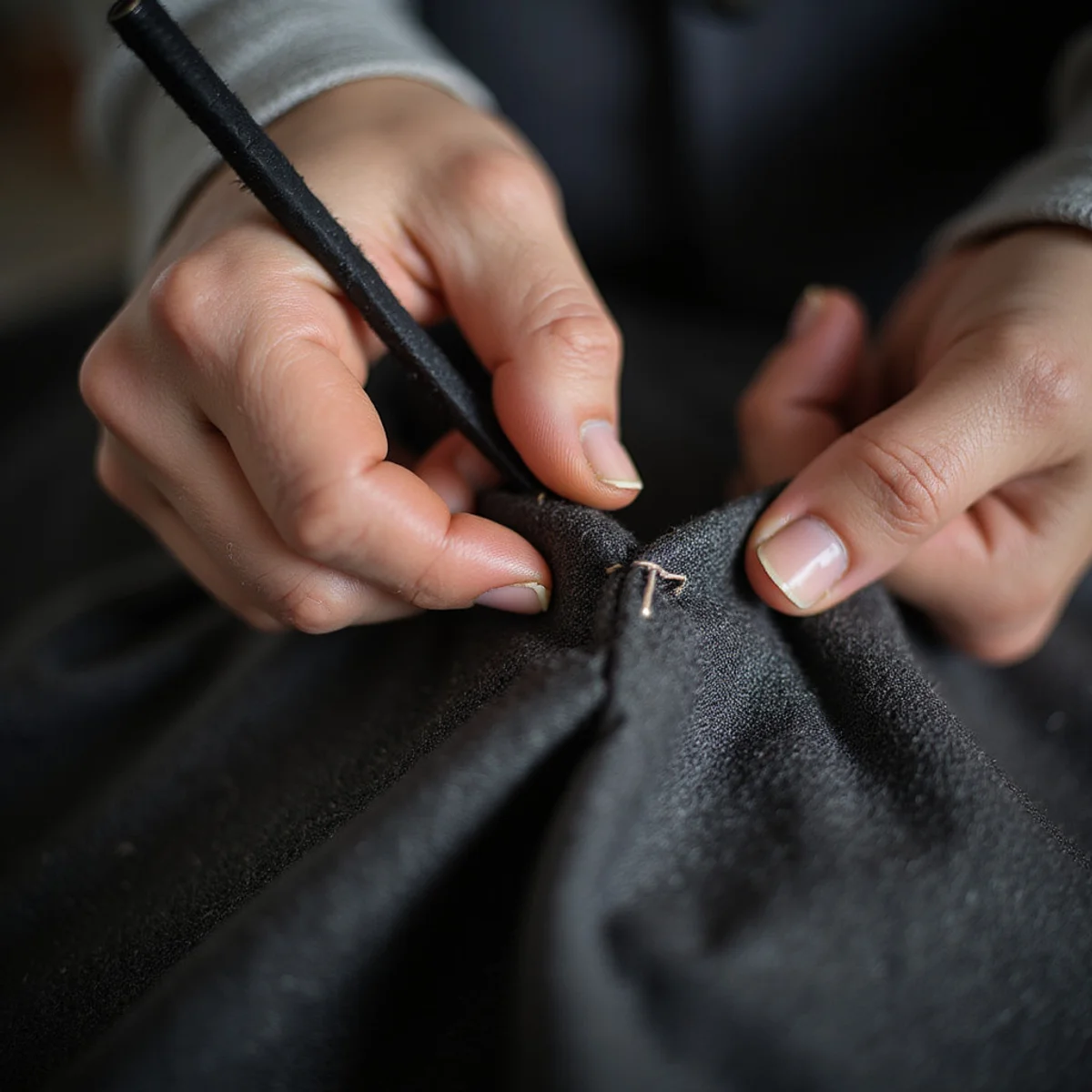
Anxiety about ruining a garment is reasonable. Many homeowners and business owners worry about handing over a vintage suit or a piece with deep sentimental value. Will alterations ruin my suit?
That is the most common question clients ask at the counter. We see this hesitation every single day. A lot of people have experienced a poor alteration job in the past.
Here is exactly how a skilled tailor handles reversibility. Our team will show you what is actually destructive and how to assess whether a specific adjustment is safe. Let us look at the facts and practical ways to protect your wardrobe investments.
Reversible vs irreversible, the key distinction
Every alteration falls into one of three distinct categories. You need to know these before a needle ever touches your fabric. Our experts classify changes based on how easily the work can be undone.
Understanding this protects your investment. Can alterations be reversed? The answer depends entirely on the cutting shears.
We look for the “inlay”, which is the industry term for the extra fabric hidden inside the seams. Modern Canadian off-the-rack trousers usually feature a 5-centimetre (2-inch) inlay. Here is how different jobs rank on the reversibility scale:
Fully reversible: The alteration can be completely undone with zero evidence left behind. This is typical of:
- Taking in a waist where the original fabric stays tucked inside the seam.
- Hemming with the original hem folded up securely rather than cut off.
- Adding a floating lining to a jacket.
- Shortening trousers from the cuff to keep the original cloth intact.
Partially reversible: These alterations can mostly be undone, but faint traces remain. This includes:
- Letting out cloth pressed at a previous length (leaving a visible old crease).
- Repositioning a buttonhole (the old stitched area might show slightly).
Irreversible: The cloth gets cut or removed completely. Once done, the garment cannot be restored to its original state. Examples include:
- Complete shoulder reconstruction on a jacket.
- Major jacket length reductions requiring cut cloth.
- Lengthening sleeves from buttoned cuffs without extra seam allowance.
The preservation approach
For any valued garment, a skilled tailor strongly favors reversible methods. Business owners need reliable workwear that lasts for years. Environment and Climate Change Canada notes the average Canadian throws out 37 kilograms of textiles annually.
We actively fight this waste by using specific preservation techniques. A good alteration extends the life of a garment instead of limiting its future use. Our workshop follows three fundamental habits to ensure safe suit alterations:
- Preserve original hems. Trousers and skirts are shortened by folding the original hem inside and securing it with a blind stitch, not by cutting. If the garment passes to a taller owner later, the original length remains fully intact.
- Retain seam allowance. Taking in a waist involves folding and securing the cloth on the inside rather than trimming it away. Letting the garment out down the road becomes a simple process.
- Mark rather than remove. Human bodies change during athletic seasons, pregnancies, or different life stages. We mark adjustment points gently rather than executing aggressive cuts right away. A light tack that releases easily works better than a permanent, final seam.
Taking in vs letting out, the material question
The main physical constraint for any adjustment is the available seam allowance. This is the amount of cloth folded inside the seam that can safely be unfolded. You cannot let out a garment if the fabric simply does not exist.
We always check the interior seam allowance before quoting a price. The quality and era of the suit dictate how much room you actually have. Modern off-the-rack brands in Canada, like RW&CO or standard mall retailers, often trim seams tightly to save on manufacturing costs.
Our tailors frequently see slim-cut models with barely 1.25 centimeters (half an inch) of extra fabric. Vintage suits built before 1985 usually feature highly generous seam allowances. Tailors from that era fully expected a person’s body to change over a lifetime.
Here is a quick look at typical seam allowances you can expect:
| Garment Type | Average Seam Allowance | Alteration Potential |
|---|---|---|
| Modern Off-The-Rack Suit | 1.25 cm (0.5 inches) | Very limited letting out. |
| High-End Custom Suit | 2.5 to 4 cm (1 to 1.5 inches) | Excellent for standard adjustments. |
| Pre-1985 Vintage Suit | 5+ cm (2+ inches) | Highly adaptable for future changes. |
“Let the waist out an inch” is simply not physically possible on every piece. We will tell you upfront if there is not enough material to achieve your requested change.
When a garment can’t be altered safely
Sometimes the best advice is to leave the garment exactly as it is. A piece might have deep sentimental value, making the risk of damage too high. Our team regularly turns down jobs if the physical structure of the fabric is compromised.
We see specific issues that make stitching dangerous. Decades of heavy perchloroethylene (Perc) dry cleaning can severely weaken natural fibers like wool and silk. This creates a condition known as “dry rot”, where the cloth literally crumbles under a needle.
Here is a short list of cases where alterations are strongly discouraged:
- Very fragile vintage pieces where the cloth tears upon gentle probing.
- Dry-cleaning-damaged garments where the underlying weave is actively failing.
- Museum-quality heirlooms from before 1950 that hold more value preserved as-is.
- Restricted rental garments marked “no alterations” by the rental shop.
- Mathematical impossibilities like trying to let out a waist with zero extra material.
Catherine L. brings her late father’s vintage suits to our shop for annual drape checks and restoration work. She owns several beautiful pieces that require very delicate handling. We have turned down two of them for alteration because the cloth was just too fragile for further stitching. She genuinely thanked us for those honest “no” answers.
On-site workshop = no lost garments
A surprisingly common failure at alteration counters is the completely lost garment. Many dry cleaners and tailor shops ship pieces to third-party partner workshops across town. Paperwork gets misplaced, tracking numbers fail, and your expensive suit vanishes into the supply chain.
We completely eliminate this risk because nothing ever leaves the building. Every single project stays right here in our secure Canadian facility. The garment hangs safely on a clearly labelled rail from the moment of drop-off right through to pickup.
“A strict in-house policy is the only guaranteed way to protect a client’s irreplaceable garments.”
For vintage and heirloom pieces specifically, see altering vintage and heirloom suits. Proper care requires a very specific approach for older textiles. For broader choices about whether to fix or replace an item, read our breakdown on altering vs buying new.
Our experts are ready to review your garments in person. To book a professional assessment, see our alterations service. We will tell you honestly what works and what does not before anyone gets near the cloth.
Common questions
Can a cut hem be re-let-out if I grow or pass the garment on?
+
Only partially. The cut edge cannot be restored to its original length. Whenever possible we preserve the original hem and take up length by adjusting rather than cutting — so the alteration is reversible if the garment is passed on later.
What kinds of garments will you refuse to alter?
+
Fragile vintage where the thread is the only thing holding the cloth, museum-quality pieces better left untouched, and garments where the requested alteration would damage the construction (e.g., letting out a waist with no seam allowance). We will tell you up front rather than take the job.
Is anything ever sent to a third party?
+
No. Every alteration at Finch & Co. happens in our Fort Street workshop, by our hands. The garment never leaves the shop.
More from this cluster
Alterations Cost in British Columbia
BC-wide alteration pricing: suit $75–$300, dress $50–$250, hems $20–$35. What drives cost, why on-site beats outsourced, Vancouver comparisons.
InformationalAltering Vintage and Heirloom Suits
What's possible with vintage full canvas, invisible darning on moth damage, respectful restoration, and when a piece is better left untouched.
Decision stageAltering vs Buying New: When Is Each Right?
A decision matrix for when alterations extend a quality garment vs when buying new is better value. Honest advice, not a sales pitch.
InformationalHow Long Do Suit and Dress Alterations Take?
Standard 1–2 weeks explained. When multiple fittings are needed, rush service options, and how to time alterations around weddings and court dates.
Questions beyond what's here?
Free thirty-minute consultations on Fort Street. We'll answer your specific questions and give you a realistic quote.