Wedding Suits and Groomsmen in Victoria
Planning a Victoria wedding? When to start, how to coordinate groomsmen, out-of-town measurement logistics, and seasonal fabric choice.
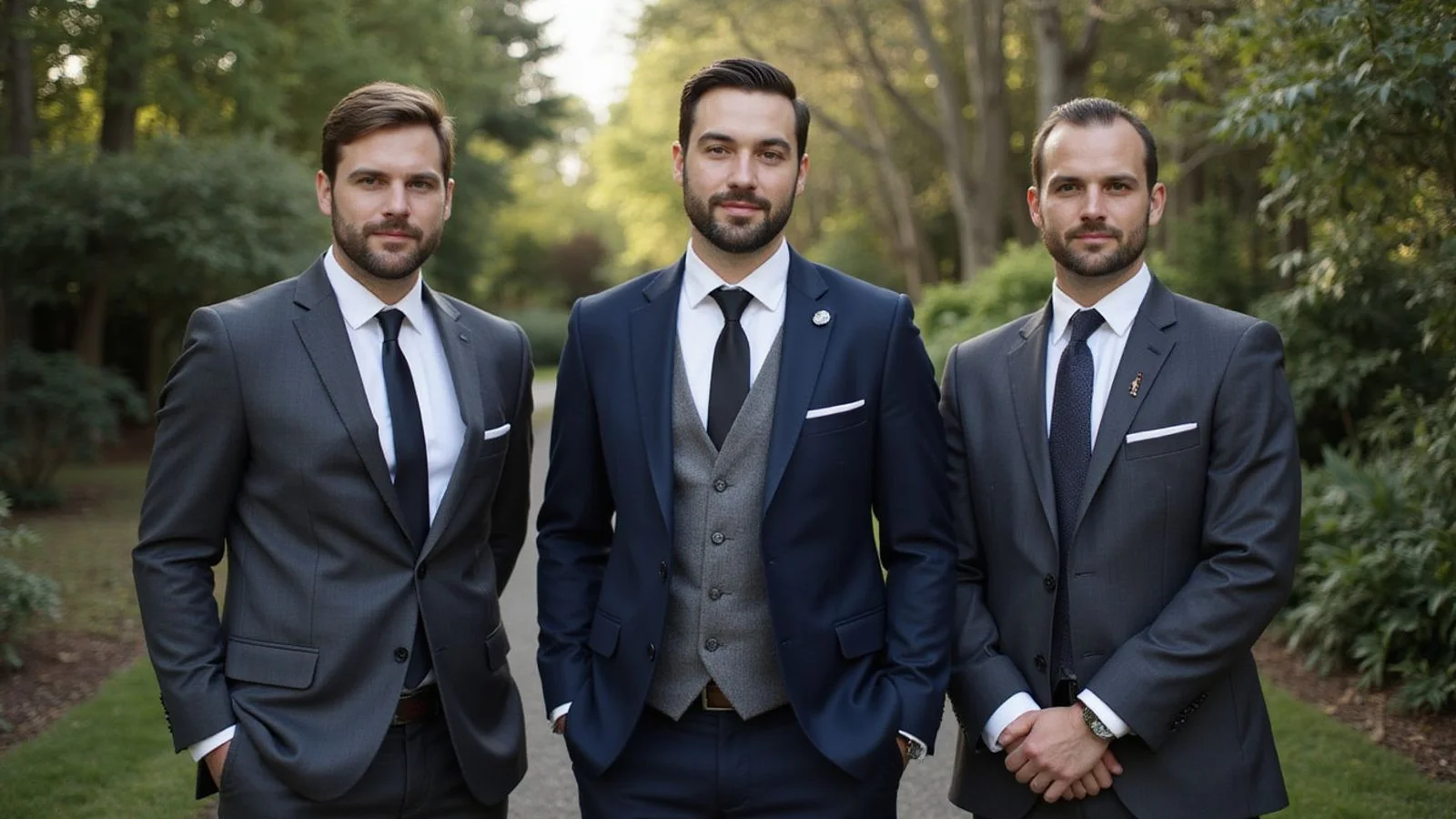
You know how complex planning a major event can get. As a business owner or homeowner, you already manage countless moving parts daily.
Planning a Victoria wedding adds ferry schedules, vendor timelines, and unpredictable coastal weather to your plate. Your attire should simplify your day, not add to the chaos.
We are a professional service team dedicated to streamlining this process for you. Finding the right wedding suit tailor victoria bc locals trust makes all the difference. Our goal is to ensure you look sharp without the stress.
Let’s break down exactly how to manage timelines, coordinate your groomsmen, and select the right fabrics for a coastal climate.
When to start
You should begin planning your wedding attire at least four to five months before the event. This window gives you plenty of time for fabric selection, construction, and multiple fittings.
We recommend the timelines below to guarantee a stress-free experience. The following chart outlines the minimum and ideal lead times based on the size of your group.
| Role | Minimum lead time | Ideal lead time |
|---|---|---|
| Groom alone | 3 months | 4 to 5 months |
| Groom + small party (2 to 3 groomsmen) | 4 months | 5 months |
| Groom + larger party (4 to 6 groomsmen) | 5 months | 6 months |
| Party of 7+ | 6 months | 7+ months |
Our Canadian custom production process requires about 8 to 12 weeks just for the physical construction of the garments. A true wedding bespoke tailor requires time to draft a unique paper pattern and conduct at least two to three fittings.
We suggest starting as early as possible to avoid expensive rush fees. Made-to-measure construction can compress these timelines to about 4 to 7 weeks. This faster option works wonderfully for groomsmen who live far from Victoria and cannot manage multiple in-person visits.
Coordinating groom and groomsmen
The most effective approach is to dress the groom and groomsmen in complementary styles, rather than identical outfits. This strategy ensures the party looks unified in photographs without resembling a corporate uniform.
We frequently see couples matching their group attire to specific Victoria venues. A formal black or deep navy combination perfectly suits the grand ballroom at The Fairmont Empress. Our team loves using a lighter, textured grey for outdoor ceremonies at places like Sea Cider Farm.
When designing a groom suit victoria photographers love to shoot, contrast is your best friend. We recommend two primary styling strategies:
- Same fabric, different details: The entire group wears the exact same mid-grey wool. The groom stands out with peak lapels and a matching vest, while the groomsmen wear notch lapels and no vests.
- Tonal family, different fabrics: The groom wears a deep charcoal suit. The groomsmen wear a slightly lighter mid-charcoal or navy. All jackets share the same lapel width, vent style, and button count.
James M. chose the second option for his 2025 Cadboro Bay wedding. His own suit was a Holland & Sherry charcoal with a peak lapel. His groomsmen wore a Vitale Barberis Canonico mid-grey with notch lapels and side vents. The resulting photograph reads as a cohesive party without looking like a catalogue.
Out-of-town groomsmen
You can successfully fit remote groomsmen by using a strict, professional measurement protocol. Getting groomsmen bespoke victoria packages organized requires accurate initial data.
We use a proven remote system for party members across Canada and internationally. The process follows these four steps:
- We send a detailed measurement sheet with photos and specific notes, such as holding the tape level under the armpits instead of on top of the shoulder blades.
- The groomsman visits a local professional tailor in their home city.
- We review the returned data, flag any inconsistencies, and request a second pass if needed.
- A single verification fitting is scheduled when the groomsman arrives, typically the Thursday or Friday before a Saturday wedding.
Minor adjustments are completed on the spot during that final verification. Our team strongly advises against using cheap digital measuring apps for this critical step. These automated services that ask for self-measurements produce a 30 to 40 percent miss rate in our experience.
We always tell clients that paying a local shop $20 to $30 CAD for professional measurements is a brilliant investment. That small upfront cost prevents massive headaches and emergency alterations during your wedding week.
Seasonal fabric for a Victoria wedding
Victoria wedding season runs from May through September, and your fabric weight must match our specific coastal climate. You need materials that breathe during warm afternoons but offer protection against sudden ocean breezes.
We base our fabric recommendations on local climate data. Victoria summer highs average between 19°C and 22°C, which equals roughly 66°F to 72°F.
Our tailors recommend matching your cloth to the specific month of your event. The following seasonal guide will help you choose wisely:
Spring and Summer Options
- May to June (shoulder season): Choose a mid-weight Italian or British wool, around 10 to 11 ounces. This weight is versatile enough for crisp spring mornings and sunny afternoons.
- July to August (peak summer): Opt for a lighter 8 to 9-ounce wool or pure Irish linen from a respected mill like Baird McNutt. Linen creases gracefully and fits a garden setting perfectly.
Autumn and Winter Options
- September (shoulder season): Return to a mid-weight wool. We suggest a subtle texture like a fresco or hopsack weave to match the autumn transition.
- October to December (winter): Select heavier 11 to 13-ounce worsted wool, tweed, or flannel. These fabrics provide essential warmth for evening ceremonies.
Avoid very lightweight tropical wool for a coastal Victoria wedding. The strong wind blowing off the Inner Harbour cuts right through thin materials.
Patterns on file for anniversaries
We keep your exact paper pattern securely on file long after your wedding day. This archive allows a tailor to recreate or adjust your garments for future anniversaries and formal events.
Our long-standing Oak Bay clients frequently use this service a decade later. When their children ask to wear their father’s suit for their own weddings, we can craft a matching one from the exact same blueprint.
Adult bodies naturally change over time. We intentionally leave an extra 1.5 to 2 inches of seam allowance in the trouser waist and seat during the initial construction. This structural foresight makes future size adjustments fast and inexpensive.
Booking and Alterations
For fitting coordination, read about suit alterations for grooms and groomsmen or visit our main alterations service page. Ready to start the main planning conversation? Book your initial consultation through our custom suits portal.
Common questions
Can out-of-town groomsmen get measured remotely?
+
Yes. We send a detailed measurement protocol to a local tailor or trusted person near each groomsman, verify the measurements by photo and phone, then run a single verification fitting when the groomsman arrives the weekend before the wedding.
Do groomsmen need matching suits?
+
No — complementary rather than identical is more modern. We coordinate fabric family, lapel width, and button details across the party so the look reads cohesive without being uniform. The groom's suit usually differs subtly — darker cloth, peak rather than notch lapel, or a waistcoat.
What's the minimum lead time for a full wedding party?
+
Four months for a party of four to six; five to six months for larger parties. Shorter lead times usually push groomsmen toward MTM or rental while the groom goes bespoke.
More from this cluster
Bespoke Suit Cost in British Columbia
BC bespoke pricing: $1,800 everyday British wool through $4,500 flagship Italian. What drives cost, Vancouver comparisons, payment structure.
InformationalThe Bespoke Suit Process: Step by Step
Consultation, measurement, fabric, basted fitting, final fitting, delivery — every stage, what you do, and what the workshop does in between.
InformationalBespoke Suits for Hard-to-Fit Bodies
Broad shoulders and narrow waist? Short stature? Asymmetric shoulders? How hand-drafted bespoke addresses each — and realistic expectations.
Decision stageBespoke vs Made-to-Measure vs Off-the-Rack: What's the Real Difference?
Side-by-side comparison of pattern source, fittings, construction, price, and turnaround — and an honest take on which tier is right for which buyer.
Questions beyond what's here?
Free thirty-minute consultations on Fort Street. We'll answer your specific questions and give you a realistic quote.