How Much Should You Spend on a Bespoke Suit?
A budget framework for your bespoke suit: how to match cloth tier to use, where to spend up, where to hold back, and what cost-per-wear actually looks like.
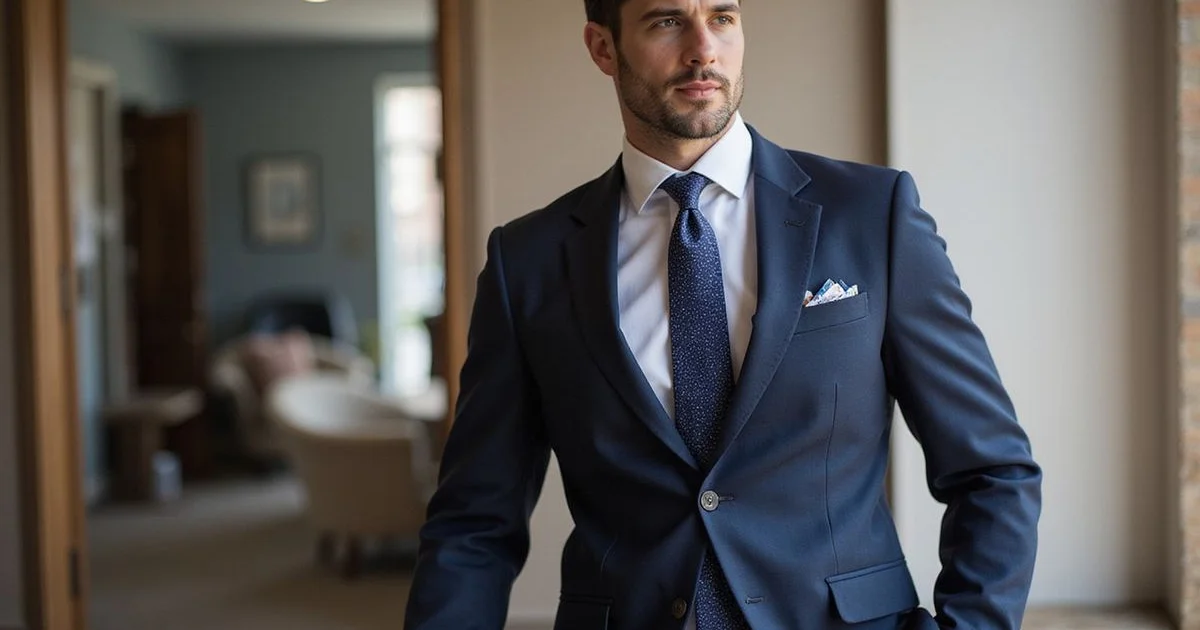
We know that establishing a clear bespoke suit budget is often the hardest part of walking into a tailor shop. For most clients in Victoria, a sensible number sits between $1,800 and $3,000.
Our special occasion and signature commissions do reach our top range of $4,500. A first order rarely needs to go that high.
We are going to break down the three main tiers and show you exactly what to spend on a bespoke suit. This simple breakdown will help you match your investment to your actual daily routine.
Three budget tiers, three reader situations
We handle consultations that usually land in one of three distinct brackets. Match your budget to your real use, rather than to a suit you saw in a magazine.
| Budget | Best fit for | Cloth direction |
|---|---|---|
| $1,800 to $2,200 | First bespoke suit, regular business wear | British worsted wool (Super 110s) |
| $2,500 to $3,300 | Second or third suit, wedding, weekly rotation | Italian wool (Vitale Barberis Canonico) |
| $3,500 to $4,500 | Special occasion, signature piece, executive wardrobe | Top-tier Italian or British (Holland & Sherry) |
Our entry tier already includes everything that makes a custom suit truly exceptional. You receive a hand-drafted paper pattern, two fittings, and full canvas construction.
We never make the internal build thinner at the lower end. Clients are simply choosing a hard-wearing British cloth instead of a softer premium fabric.
Mid and Top Tier Distinctions
Our mid tier brings a finer hand to the fabric. Mills like Vitale Barberis Canonico provide Italian wools that drape with incredible fluidity.
We love how these Super 120s fabrics photograph well at a wedding and feel soft through a long day in court. They do need more careful rotation to keep their shape.
Our top tier is where superfine cloths and rare mill stock enter the conversation. Fabrics from Holland & Sherry or Loro Piana offer a brilliant texture and sheen.
We always advise that luxury materials are not a sensible starting point for a first commission. These fine wools are delicate, making them a pleasure to own but prone to wearing out quickly under daily use.
Where to spend up, where to hold back
We always tell clients that if the budget feels tight, the order of importance is clear. Spend on the choices that shape how the garment fits and lasts.
Our team recommends holding back on the visual details you can add to a future order. The internal structure matters far more than the surface stitching.
Where You Should Spend Up
We suggest focusing your funds on three critical areas. These choices will directly impact the comfort and longevity of your purchase.
- Our shop includes full canvas construction by default, as it is the most vital upgrade in custom clothing.
- Glue in a fused suit breaks down and bubbles after three to five years.
- We prefer wools weighing between 280 and 340 grams for a daily workhorse.
- A slightly heavier wool drapes beautifully, holds shape longer, and resists wrinkles.
- Our process includes a minimum of two fittings to guarantee precision.
- A third session is money well spent for an unusual frame or a first-time client.
Where You Should Hold Back
We advise skipping pure aesthetics if you want to keep the final price tag down. Your first priority should be mastering the fit.
- We only recommend a second matching trouser if you plan to wear the suit three or more times a week.
- Skip the extra pants for a wedding suit or rare-use commission.
- Our team loves a striking paisley silk lining on a special-occasion piece.
- This detail is completely unnecessary on a basic daily-wear garment.
- We think working buttonholes and hand-rolled lapels are lovely additions for a second commission.
- Keep the details quiet on your very first order.
A simple cost-per-wear check
We know that the sticker price is only half the story. Cost per wear is the true metric that shapes a smart professional wardrobe.
Our daily-rotation suits, priced around $2,500, easily last a decade when properly maintained. If you rotate that garment twice a week and give the wool 24 to 48 hours to rest, the fibers naturally spring back into shape.
We calculate that a ten-year lifespan brings your cost down to roughly $2.40 per wear. A $700 off-the-rack fused suit replaced every three years lands at a similar per-wear figure.
| Suit Type | Lifespan | Cost Per Wear |
|---|---|---|
| $2,500 Canvas Suit | 10 Years | ~$2.40 |
| $700 Fused Suit | 3 Years | ~$2.25 (Plus worse fit) |
Our clients quickly realize the cheaper suit comes with poor breathability and zero kept patterns for future orders. Investing in the canvas construction is an economic strategy.
Special Occasion Math
We apply a different formula to a $3,500 wedding or gala suit. Worn five times a year for ten years, the math comes to about $70 per wear.
We find that for the most photographed days of your life, that price reads as incredibly fair. Quality garments simply age beautifully.
Our kept patterns change the financial equation for your future orders. Consider the long-term benefits of establishing your fit profile on day one:
- We skip the full drafting work on a second order within three years.
- This trimmed time and effort gets deducted from your next commission.
- Our team always says that your first suit essentially funds the next one.
- You are building a relationship with your maker, not just buying clothes.
Budget mistakes we see most often
We have noticed familiar patterns after a decade on Fort Street. The most common mistakes are not about spending too little.
Our clients usually run into trouble by putting their money in the wrong place. Avoiding these traps will save you frustration and cash.
- We constantly see business owners order a heavy 12-ounce wool suit and then suffer in August.
- If you wear suits year-round, a breathable 320-gram Baird McNutt Irish linen deserves a spot in your budget.
- Our team hates seeing a $4,000 delicate fabric wasted on a rushed fitting process.
- The cloth tier is flexible, but the fitting count is absolutely mandatory.
- We advise that two mid-tier commissions will outwear one flagship item every time.
- You cannot wear a single suit five days a week without destroying the natural fibers.
- Our tailors caution against combining contrast pick stitching, a bright lining, and working buttonholes all at once.
- The result reads loud where it should command quiet respect.
Setting the right budget for your first commission
We find the most useful conversation about how much to spend on a bespoke suit begins with how you live. Tell the tailor how often the jacket will be worn, what events are on the calendar, and what cloths you have enjoyed in the past.
Our team will suggest a number that fits the wardrobe you already have, rather than the one a brochure says you should want.
You can read more about our bespoke suits service and book a free 30-minute consultation at the workshop.
We provide every quote in writing at the end of that meeting. There is absolutely no commitment required to get started today.
Common questions
Should my first bespoke suit be entry tier or a splurge?
+
For most first commissions, the entry tier is the right call. You get the same hand-drafted pattern, two fittings, and full canvas construction as our flagship work. The fabric is hard-wearing British wool, which is forgiving while you learn how a true bespoke suit feels day to day. Save the splurge for your second order, once you know what you would change.
Is it worth paying more for Italian wool over British wool?
+
It depends on how the suit will be used. Italian wool drapes more fluidly and feels softer in long meetings or weddings, but it bruises more easily and needs careful rotation. British wool is heavier, more crease-resistant, and built for daily wear. Neither is better. The right answer is the one that matches your week.
How do I know if I am being upsold features I do not need?
+
A good tailor will talk you out of details before talking you into them. Working buttonholes, contrast linings, and hand-rolled lapels are real craftsmanship, but they belong on a second or third commission, not your first. If your quote is loaded with surface details before fit and cloth are settled, ask for a stripped-back version and compare.
More from this cluster
Bespoke Suit Cost in British Columbia
BC bespoke pricing: $1,800 everyday British wool through $4,500 flagship Italian. What drives cost, Vancouver comparisons, payment structure.
InformationalThe Bespoke Suit Process: Step by Step
Consultation, measurement, fabric, basted fitting, final fitting, delivery — every stage, what you do, and what the workshop does in between.
InformationalBespoke Suits for Hard-to-Fit Bodies
Broad shoulders and narrow waist? Short stature? Asymmetric shoulders? How hand-drafted bespoke addresses each — and realistic expectations.
Decision stageBespoke vs Made-to-Measure vs Off-the-Rack: What's the Real Difference?
Side-by-side comparison of pattern source, fittings, construction, price, and turnaround — and an honest take on which tier is right for which buyer.
Questions beyond what's here?
Free thirty-minute consultations on Fort Street. We'll answer your specific questions and give you a realistic quote.